Building a Career in Sound Engineering
Sound engineering has become a serious career option as India’s media and entertainment sector continues to expand. According to industry reports, the media and entertainment industry in India is expanding at a rate of more than 10 percent per year, which is caused by OTT platforms, digital creators, games studios, and live events. Audio production and post-production roles are among the fastest-growing segments within this ecosystem.
This growth has increased interest in sound engineering colleges in India, especially among students looking for practical, skill-based careers rather than purely academic degrees. Nevertheless, sound engineering is a practical profession, and in this field, results of the career generally hinge on the quality of training, exposure in the studio, and alignment with the industry. Not all institutes educate students on an equal platform.
Understanding how sound engineering programs are structured, what facilities matter, and how careers actually emerge, helps students make informed choices when evaluating sound engineering colleges in India.
Why Sound Engineering Is Becoming a High-Growth Career in India
The demand for professional audio work has expanded far beyond music albums. Running from films, web series, advertisements, podcasts, games, to live events, every arena in media and entertainment industry requires high-quality sound production.
So, the key-driving factors for sound engineering education includes:
- Blistering development of OTT platforms and regional media creation.
- Expansion of free-standing music, podcasting and creator-based platforms.
- Growth in live concert, festival and experiential marketing events.
- Increasing application of sound design in games, animation, AR and VR.
According to industry estimates, audio related roles are increasing at a quicker pace compared to most traditional media employment, especially in digital first content. This shift has encouraged audio engineering colleges in India to update their programs and focus on employability.
What Makes a Strong Sound Engineering Program
An effective sound engineering program will provide creativity training, depth of technical training and regular exposure.
Curriculum Depth and Practical Exposure
A good curriculum normally includes:
- Principles of sound physics and acoustics.
- Recording methods and positioning of microphones.
- Mixing and mastering processes.
- Film, game, and digital sound design.
The most effective sound engineering courses after 12th prioritize studio time. Students within the quality program dedicate 60 to 70 percent of the learning time at the lab, studios and live sound setting. This working emphasis assists students to gain confidence in professional equipment and software.
Infrastructure and Studio Access
Sound engineering is skill-driven, making infrastructure a critical factor.
Strong sound engineering colleges in India provide:
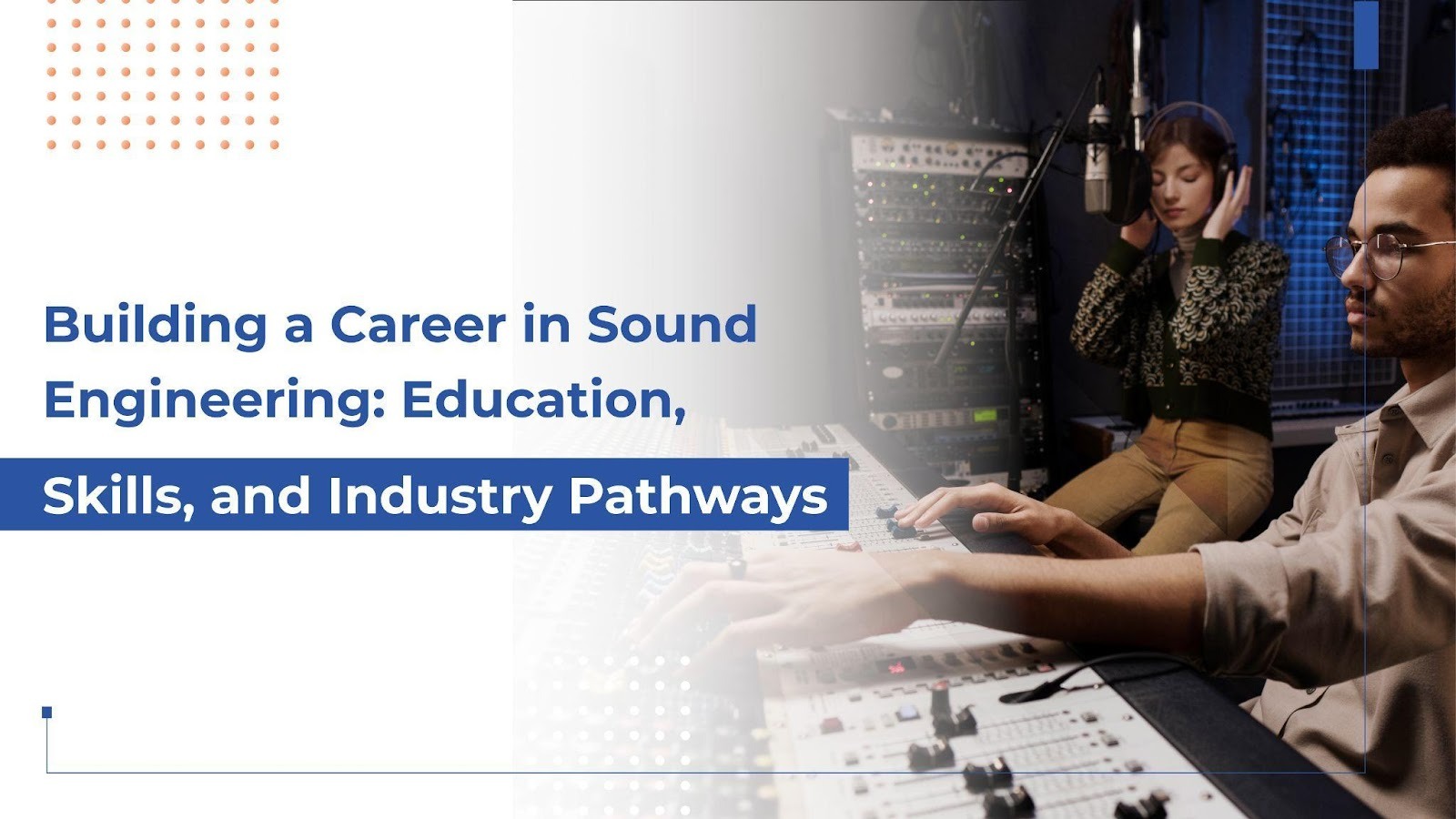
- Multi-track recording studios.
- Foley and sound design labs
- Live sound and performance installations.
- Industry-standard digital audio workstations and consoles
Colleges that offer studio engineering and live sound training prepare students for both controlled studio work and real-world performance conditions, improving job readiness.
Faculty Experience and Industry Mentorship
The experience of the faculty has a direct effect on the way students are integrated into the industry.
The best institute for sound engineering usually has instructors who:
- Have been involved in movies, music production, broadcast or live sound.
- Share actual production work processes and struggles.
- Keep industry contacts that enable internship and mentorship.
Active industry mentorship programs introduce students to professional expectations, deadlines and collaborative work environments.
Learning Environment at a Modern Private University in Mumbai
Location plays an important role in sound engineering education. Mumbai remains India’s center for films, music, advertising, and broadcast media.
Every strong modern private university in Mumbai provides students with:
- Access to media houses, production studios and recording facilities.
- Frequent guest lectures, workshops and studio visits.
- Internship and project opportunities in the course of studies.
Top private universities offering sound engineering promote interdisciplinary learning by combining audio education with film, animation, and media programs. This reflects real industry workflows and strengthens professional readiness.
Admission Pathway and Eligibility for Sound Engineering Courses
Most sound engineering colleges in India offer flexible entry options depending on the program level.
Eligibility Criteria
- Completion of Class 12 in any stream with science preferred for technical understanding.
- Interest in sound, music or audio technology.
- In certain institutes, entrance tests or interviews.
Institutions offering recording and sound design courses often assess listening ability, creativity, and motivation instead of focusing only on academic marks.
Course Formats
- Diploma programs lasting 1 to 2 years
- Bachelor’s degree courses lasting between 3 to 4 years.
- Short courses in certification.
Students seeking long-term growth often choose audio production degree programs, which provide deeper technical training and wider career flexibility.
Career Opportunities After Completing Sound Engineering
Sound engineering education at the best sound engineering colleges in India unlocks a wide range of career opportunities in the core as well as emerging arenas. Here are some of them for you to know:
Core Career Roles
Typical career opportunities after studies at the leading sound engineering colleges in India are:
- Sound Engineer
- Audio Recording Engineer
- Mixer and Mastering engineer.
- Live Sound Technician
- Studio Engineer
These individuals operate in movie studios, music record labels, television networks, streaming services and live event providers.
Emerging Career Segments
Newer opportunities that are being created by technology and digital platforms include:
- Games and animation sound design.
- OTT and digital content audio post production.
- Production of podcasts and audio storytelling.
- Sound design, immersive AR and VR.
Industry hiring data indicates that sound engineering career opportunities are expanding fastest in digital-first and interactive media formats.
How to Choose Among Sound Engineering Colleges in India
The correct selection of the institute involves more than advertisements.
Students should assess:
- Depth of practical training
- Studio infrastructure, quality, and availability.
- Industry experience with the faculty.
- Exposure to internship and project.
- Alumni career outcomes
Institutes offering music production and audio technology programs should clearly demonstrate how students move from academic learning to professional practice.
Future Scope of Audio Technology and Creative Engineering
The future of sound engineering is high-end audio technology and creative innovation.
The trends influencing the field are:
- Extending immersive and spatial audio.
- Use of interactive sound in the digital platform.
- Audio creation based on artificial intelligence.
- Global collaboration enabled by digital workflows
The graduates trained in both creative and technical fields will be in a better position to cope with these changes. This makes selecting forward-looking sound engineering colleges in India critical for long-term career success.
Conclusion
Sound engineering has become an applied and technology-based profession that can be applied in the media, entertainment and digital media. With the increasing demand of industries, the value of good education is even greater.
The right sound engineering colleges in India teach more than software and equipment. They enable students to build listening skills, technical skills, creative thinking, and professional discipline. A good infrastructure including exposure to practicalities and qualified faculty can make the students have good sustainable careers in audio production and creative engineering.
For students who are keen on sound and technology, the right institute is the gateway to a relevant and futuristic career.
About the Author