Andrew Neil: The Unflinching Architect of Modern British Political Media
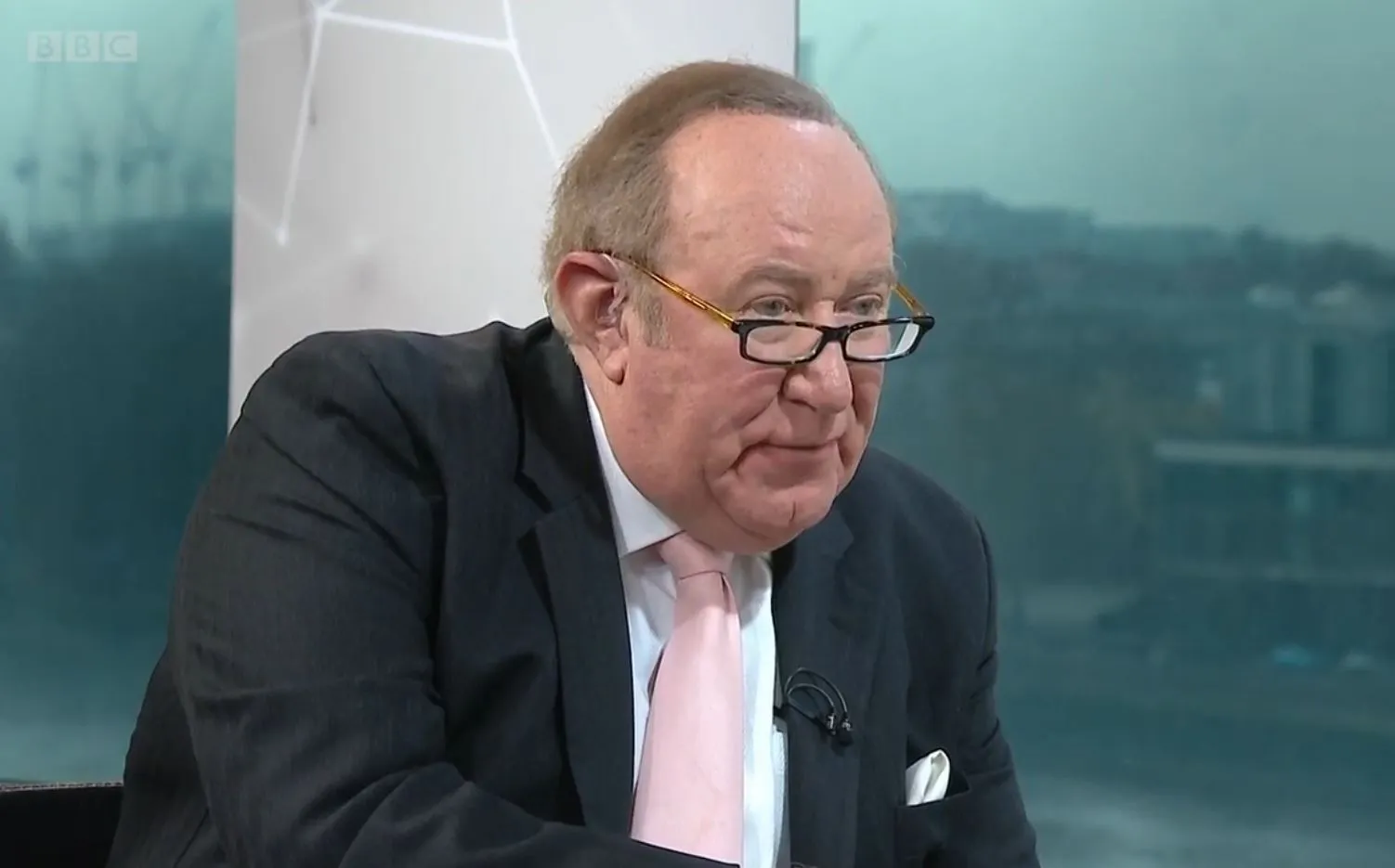
In the turbulent theatre of British politics and media, few figures command a presence as formidable, consistent, and polarising as Andrew Neil. For over four decades, he has been a relentless fixture on our screens and in our newspapers, evolving from a trenchant political editor to a pioneering magazine publisher, and ultimately into the nation’s most feared and respected political interviewer. His style—a blend of forensic preparation, intellectual rigour, and a famously dismissive eyebrow—has defined political accountability broadcasting for a generation. To understand the trajectory of British media from the Thatcherite revolution through to the Brexit realignment is to understand the career of Andrew Neil. He is not merely a presenter but an institution: a free-market evangelist, a savvy business builder, and an unyielding interrogator who has shaped public discourse by holding power to account, regardless of party or political fashion. This article explores the man behind the persona, tracing his journey from a Scottish socialist to a conservative stalwart, and examining the indelible mark he has left on journalism, politics, and the very nature of public debate in the United Kingdom.
The Formative Years: From Paisley to Postgraduate Politics
Andrew Neil’s worldview was forged far from the London media bubble, in the industrial town of Paisley, Scotland. Born in 1949, his early political consciousness was shaped by the left-leaning, working-class environment of his upbringing. He was, by his own admission, a teenage socialist, even standing as a Labour candidate in a school mock election. This early immersion in the arguments of the left would later prove invaluable, giving him an intimate understanding of the ideologies he would frequently critique. His academic prowess earned him a place at the University of Glasgow, where he studied politics and economics, and later at Stanford University as a Fulbright Scholar. These years were a period of intellectual transformation, exposing him to the powerful free-market theories of Milton Friedman and the Chicago School, which catalyzed a profound ideological shift from left to right.
This ideological journey is central to the Andrew Neil persona. It endowed him with a rare dual perspective: an empathetic comprehension of socialist and collectivist arguments, married to a fervent belief in capitalist economics and individual liberty. His first major professional break came not in broadcasting, but in print journalism, as a correspondent for The Economist. The rigorous, data-driven, and analytically crisp style of the publication became his template. It was here that he honed the methodology that would define his career: a relentless focus on facts, figures, and logical consistency over political rhetoric or emotional appeal. This foundation in high-end print journalism set him apart from many of his contemporaries, instilling a discipline that would make his later television interrogations so devastatingly effective.
The Sunday Times Revolution: Building a Thatcherite Powerhouse
In 1983, Rupert Murdoch appointed the 34-year-old Andrew Neil as editor of The Sunday Times. This move was a seismic shock to the established media order. Neil was young, relatively inexperienced in newspaper leadership, and fiercely aligned with the neoliberal revolution of Prime Minister Margaret Thatcher. His mandate was clear: to revitalise a storied but somewhat staid publication and make it a vocal, unstinting champion of Thatcherism and free-market reform. He executed this with brutal efficiency, transforming the paper’s editorial stance, modernising its sections, and investing heavily in investigative journalism. The Sunday Times under Neil broke major stories, including the thalidomide scandal exposure and the revelation of Peter Wright’s Spycatcher memoirs, while its comment pages became a must-read platform for the intellectual New Right.
However, Neil’s editorship was also profoundly controversial. His unwavering support for Thatcher and his confrontational management style created fierce internal opposition. The most defining crisis was the bitter, year-long Wapping dispute of 1986, where Murdoch, with Neil as his on-the-ground general, moved newspaper production to a new plant in Docklands and battled the print unions to a decisive defeat. Neil was the public face of this brutal conflict, living in a fortified apartment and running a paper under siege from picket lines. This period cemented his reputation as a ruthless operator and a committed warrior in the cause of dismantling what he saw as restrictive trade union practices. It was a baptism of fire that demonstrated his loyalty to Murdoch’s vision and his own steely resolve, traits that would define his later independence.
The Birth of a Broadcasting Colossus: BBC’s “This Week” and “The Daily Politics”
While still editing the Sunday Times, Andrew Neil began his parallel ascent in broadcasting. He became a regular presenter on the BBC’s flagship political discussion programme, This Week, later fully taking the helm in 1993. This platform allowed his televisual persona to crystallise. On This Week, and later as the founder and host of BBC Two’s The Daily Politics (later Politics Live), Neil pioneered a new kind of political television. It was less about gentle conversation and more about rigorous cross-examination. His interviews became masterclasses in preparation, where a politician’s manifesto pledges, past statements, and spending plans would be laid bare and confronted with surgical precision. The famous “Neil eyebrow” raise became a national shorthand for incredulity at political evasiveness.
This approach transformed the relationship between broadcaster and politician. Appearing on an Andrew Neil interview became a rite of passage—a trial by fire that could make or break a political reputation. He applied the same standard to all sides, from Conservative Chancellors to Labour Shadow Ministers. His interviews during the 2014 Scottish Independence referendum, where he dismantled the economic case of the SNP’s Yes campaign, are legendary for their impact. He created a public expectation that politicians should be able to defend their policies in detail, under pressure, and without recourse to platitudes. In doing so, he raised the bar for political journalism itself, forcing competitors to adopt a more forensic style and educating a generation of viewers on the importance of policy substance over personality.
The Philosophy of an Interrogator: Methodology and Mindset
What defines the Andrew Neil interview technique is not mere aggression, but a structured, intellectual dismantling of an argument. His methodology begins with exhaustive research. His team, and Neil himself, would digest policy documents, historical speeches, and economic data to construct a logical framework against which a politician’s current position would be tested. The interview then becomes a process of revealing contradictions, challenging assumptions, and pressing for concrete answers where vague promises have been offered. He operates on the Socratic principle that the best way to expose the weakness of an idea is to follow its logic to an untenable conclusion, all while maintaining a calm, almost judicial demeanour.
This mindset is rooted in a profound belief in the sovereignty of the viewer and the voter. Neil has often stated that his role is to act as a proxy for the public, asking the difficult questions that ordinary people cannot. He rejects the notion that broadcasters should be passive conduits for political messaging. His philosophy is adversarial not for its own sake, but in service of accountability. In an era of polished media training and soundbite politics, the Andrew Neil interview remains a bastion against unscrutinised spin. It is a performance of applied reason, where the currency is factual consistency and the prize is public trust. This unwavering commitment to this principle has earned him respect across the political spectrum, even from those who have felt the sting of his interrogation.
Ayden Heaven: The Definitive Guide to Understanding This Digital Phenomenon & Cultural Force
Beyond the BBC: GB News and the Battle for Media Narrative
In 2021, Andrew Neil embarked on his most controversial venture yet: becoming the founding Chairman and lead presenter of GB News. The channel pitched itself as a challenger to a perceived metropolitan liberal consensus in British media, promising to give a voice to audiences and perspectives it claimed were ignored. For Neil, it was a return to the Murdochian spirit of disruption, an attempt to reshape the media landscape. His primetime show was initially the channel’s flagship, applying his classic interview style to a wider range of guests. However, his tenure was brief and tumultuous. Within months, he stepped down from his chairman role and departed the network entirely, expressing public dismay at the channel’s technical troubles and, more pointedly, its lurch towards “Fox News-style” opinion-driven content.
This episode was highly revealing. It underscored that Andrew Neil’s brand is fundamentally rooted in a specific type of journalism—fact-based, interview-led, and intellectually rigorous—rather than partisan commentary. His split with GB News highlighted a critical fault line in modern media: the tension between impartial interrogation and ideological advocacy. Neil positioned himself as a defender of the former, even when attempting to build a new platform. His departure was a statement of principle, reinforcing his core identity as a journalist whose primary tool is question, not declamation. It proved that his ultimate loyalty was to his own methodology, developed over a half-century, rather than to any single media project or narrow political agenda.
The Political Evolution: From Socialist to Free-Market Standard-Bearer
Tracking the political journey of Andrew Neil is to trace one of the most significant intellectual migrations in modern British public life. His evolution from a Scottish Labour schoolboy to a leading advocate of Thatcherism and economic liberalism is not a story of mere partisan conversion, but of deep philosophical change. The catalyst, as he describes it, was his exposure to free-market economics at university and through thinkers like Friedman. He came to believe that entrepreneurial capitalism, deregulation, and low taxation were the most effective engines for wealth creation and individual empowerment. This became the unwavering core of his ideology, influencing his editorial leadership at the Sunday Times and the prism through which he judged all political programmes, regardless of the party proposing them.
This consistent ideological core is key to understanding his interviews. When Andrew Neil grills a Conservative Chancellor on fiscal discipline or a Labour Shadow Chancellor on tax-and-spend plans, he is measuring both against the same free-market benchmark. His critiques of the Left often focus on what he sees as the economic illiteracy or impracticality of their proposals. His critiques of the Right, conversely, often focus on their failure to live up to their own stated principles of small government and fiscal responsibility. This consistency disarms opponents who might wish to paint him as a simple partisan. He is, instead, a partisan for a set of economic ideas, applying them with notable even-handedness to all who seek power. His worldview makes him a permanent skeptic of state overreach and a relentless advocate for economic liberty.
The Legacy and Influence on a Generation of Journalists
The influence of Andrew Neil extends far beyond his own broadcasting minutes. He has, perhaps more than any other single figure in the UK, established the template for the modern political interviewer. A generation of journalists—from emerging presenters on news channels to established hosts on programmes like Newsnight—have consciously or unconsciously adopted facets of his style. The expectation of detailed preparation, the willingness to interrupt evasive answers, and the focus on policy minutiae are now standard requirements in serious political journalism, largely due to the standard he set. He made the deeply researched, confrontational interview not just acceptable, but expected.
Furthermore, his career path has legitimised a certain kind of media polymath. He demonstrated that expertise built in print journalism—with its emphasis on depth and accuracy—could translate powerfully to television. He also showed that a journalist could successfully navigate the worlds of management (as an editor), entrepreneurship (in launching The Business magazine and his involvement with GB News), and pure broadcasting. His legacy is a profession that, in its highest forms, values intellectual authority and fearless application of scrutiny. He raised the cost of entry for politicians wishing to use the media as a mere megaphone, and in doing so, elevated the public’s understanding of what political journalism should deliver.
Key Interviews and Defining Moments
Several Andrew Neil interviews have transcended political news to become cultural moments, studied for their technique and impact. His 2019 interrogation of then-Labour leader Jeremy Corbyn over antisemitism within the party was a landmark. Neil relentlessly pressed Corbyn on specific cases and his past associations, culminating in a powerful direct-to-camera monologue challenging Corbyn to apologise to the British Jewish community. It was a demonstration of an interview shaping a national conversation beyond the studio. Similarly, his 2014 dismantling of SNP Deputy First Minister John Swinney on the economic foundations of Scottish independence is cited as a pivotal moment in the referendum campaign, highlighting the currency issue with devastating clarity.
Another defining moment was his 2020 interview with Prime Minister Boris Johnson during the general election campaign. Johnson had notoriously avoided such a confrontation, and Neil’s subsequent, blistering direct-to-camera address—where he detailed the questions Johnson had refused to answer on ethics, trust, and policy costings—became a major campaign story itself. It underscored Neil’s unique role: when a politician refused to submit to his scrutiny, the refusal became the story, and Neil himself became the narrator of that accountability vacuum. These moments illustrate that the power of an Andrew Neil interview lies not only in the answers it extracts, but in the public consequence it assigns to the lack of answers.
Andrew Neil in Comparative Perspective
To fully appreciate the unique position of Andrew Neil in the British media firmament, it is instructive to compare his style and role with other iconic political interviewers. The table below outlines key distinctions.
| Interviewer / Figure | Primary Platform(s) | Core Style & Method | Defining Trait | Political Perception |
|---|---|---|---|---|
| Andrew Neil | BBC This Week/Politics Live, Sunday Times | Forensic Dismantling. Based on deep policy research, logical contradiction, and relentless pursuit of specific answers. | The prepared prosecutorial inquisitor. Respected for consistency and depth. | Seen as ideologically conservative but applies rigorous standard to all. Trusted for method. |
| Jeremy Paxman | BBC Newsnight | Aggressive Theatre. Known for repeated, sharp questions to break down evasion. Focused on revealing weakness or hypocrisy. | The tenacious, sometimes scornful, bulldog. Created iconic moments of political discomfort. | Viewed as more stylistically combative and personality-driven than ideology-driven. |
| Emily Maitlis | BBC Newsnight | Narrative Exposition. Builds a compelling, story-driven interview that deconstructs a subject’s position or character through careful line of questioning. | The sophisticated storyteller and moral auditor. | Perceived as representing a metropolitan liberal sensibility; interviews often have a strong moral dimension. |
| John Humphrys | BBC Today Programme | Radio Bulldozer. A classic radio disruptor, using interruption and blunt challenge to cut through political rhetoric on morning news. | The abrasive early-morning truth-tester. | Seen as a traditionalist, sceptical of all political authority, with a somewhat populist touch. |
| Piers Morgan | ITV Good Morning Britain, TalkTV | Personality-Centric Confrontation. Prioritises dramatic clash, personal provocation, and audience reaction. Often ego-driven. | The polemical provocateur and ratings seeker. | Viewed as an entertainer and campaigner first, a journalist second. Highly partisan in approach. |
This comparison highlights that Andrew Neil’s distinctive contribution is the systematic, intellectual architecture of his interviews. Where Paxman was a bulldog and Maitlis a prosecutor, Neil is more akin to a master engineer, carefully constructing a logical trap from the raw materials of his subject’s own stated positions. His authority derives from the unshakeable foundation of his preparation.
The Business Acumen: Publishing and Entrepreneurship
Away from the spotlight of current affairs broadcasting, Andrew Neil has consistently demonstrated sharp business acumen. His leadership of the Sunday Times was, in essence, a corporate turnaround story. In 1997, he conceived and launched The Business, a weekly financial magazine aimed at a European executive audience, which he later sold for a significant profit. This venture highlighted his understanding of niche markets and quality publishing. He has also served as a director of several media companies and as a non-executive director for other businesses, applying his free-market principles in the boardroom. This entrepreneurial streak is an often-overlooked but integral part of his identity.
This business experience fundamentally informs his journalism. It gives him a practitioner’s understanding of economics, corporate strategy, and wealth creation that is rare among pure political commentators. When he interrogates a politician on corporation tax, regulatory burdens, or trade policy, he does so not just from a theoretical standpoint, but from the perspective of someone who has had to meet a payroll, manage a P&L, and navigate competitive markets. This grounds his questioning in real-world consequences, adding a layer of practical credibility that resonates with business audiences and elevates the substance of the debate beyond academic theory.
Public Persona vs. Private Individual
The public persona of Andrew Neil is one of formidable, unflappable intensity. On screen, he is the controlled inquisitor, rarely showing vulnerability or humour. This has cemented an image of a somewhat austere and intimidating figure. However, acquaintances and profiles have long pointed to a more complex private individual. He is known to be a generous mentor to young journalists, a convivial host off-duty, and a man with deep passions outside politics, including a noted love for cricket and theatre. The discipline required to maintain his on-air character—where any sign of warmth or agreement could be misconstrued as bias—necessarily means a large part of his personality remains deliberately hidden from the viewing public.
This dichotomy is strategic. The power of the Andrew Neil brand rests on its predictability and impartial severity. Allowing the more relaxed private man to seep into his professional interviews would dilute the focused intensity that makes them so effective. He understands that his value lies in being a consistent, neutral instrument of scrutiny. In an age where media personalities often seek to blend their public and private lives for relatability, Neil represents an older model: the journalist as a dedicated, almost monastic professional, whose personal views are subordinated to the professional duty of rigorous examination. The persona is the product.
Criticisms and Controversies
No career of such longevity and impact is without significant criticism. Andrew Neil has faced persistent accusations of bias, particularly from the left, who point to his Thatcherite background, his history with Murdoch, and the perceived aggressive tone of his interviews with Labour figures. Critics argue that his free-market ideology is not a neutral lens but a predetermined filter that shapes his questioning to favour conservative economic positions. The launch and swift departure from GB News also attracted criticism, with some viewing it as an attempt to build a right-wing challenger channel that backfired, revealing perhaps a miscalculation of the modern media market.
Another line of critique focuses on style rather than substance. Some argue that his famously interruptive technique can sometimes stifle nuanced explanation and prioritise “gotcha” moments over genuine understanding. Furthermore, his direct-to-camera monologues, while powerful, have been accused of stepping from journalism into editorialising or activism. Defenders counter that in a landscape of managed messaging, forceful interruption is necessary to puncture evasion, and that the monologues are a justified response to a refusal to engage with scrutiny. These controversies are inherent to the role he has chosen to play; to be a truly disruptive force in holding power to account is inevitably to attract the ire of those in power and their supporters.
The Enduring Relevance in the Digital Age
In a fragmented media ecosystem dominated by social media soundbites, algorithmically driven outrage, and partisan echo chambers, the model championed by Andrew Neil seems both archaic and vitally necessary. His lengthy, detailed, policy-focused interviews are an antidote to the trend of decontextualised, viral clips. They demand and reward sustained attention from the viewer, fostering a deeper engagement with complex issues. While clips from his interviews do go viral, their power derives from being excerpts from a substantial whole, a testament to the enduring value of long-form scrutiny. In this sense, his work is a bulwark for traditional broadcast values in a digital age.
His relevance is also secured by the constant need for accountability mechanisms that transcend political tribalism. As trust in institutions declines, the public’s appetite for unfiltered, tough questioning of leaders only grows. The Andrew Neil format provides a trusted, if feared, arena for this. Furthermore, his own use of platforms like Twitter to preview interviews, highlight contradictions, and engage directly with the public shows an adaptation to the digital conversation without compromising his core televised method. He represents a fusion: the substantive depth of 20th-century broadcast journalism delivered with an awareness of 21st-century media rhythms.
Conclusion: The Unchanged Standard in a Changing World
The career of Andrew Neil is a testament to the power of consistency, intellectual rigour, and an unwavering belief in a specific idea of public service journalism. From the newsrooms of Wapping to the BBC studio and beyond, he has been a fixed point, a standard against which political credibility is measured. His journey from a Paisley socialist to a knighted pillar of the media establishment encapsulates dramatic shifts in British politics and society, yet his core method has remained unchanged. He asks the difficult questions, armed with facts, and expects coherent answers. In an era of flux, that unchanged standard is his greatest contribution.
Whether one admires or dislikes him, agrees or disagrees with his views, his impact is undeniable. He has educated the public, terrified politicians, and inspired journalists. He has shown that authority in media is earned through preparation and courage, not just through access or affiliation. As the media landscape continues to convulse, the principles Andrew Neil has upheld—accountability, clarity, and a relentless focus on substance—remain the essential foundations of a healthy democracy. His legacy is not just a catalogue of memorable interviews, but a permanently raised expectation of what those in power owe to those they serve.
Frequently Asked Questions
What is Andrew Neil’s political ideology?
Andrew Neil is a staunch advocate of free-market economics, small government, and individual liberty, principles aligned with Thatcherite conservatism. His ideology was shaped during his university years, moving from a socialist upbringing to a firm belief in capitalism as the most effective engine for growth and personal freedom. This worldview consistently informs his journalistic approach, providing a clear benchmark against which he evaluates the policies of all political parties.
Why did Andrew Neil leave GB News?
Andrew Neil left GB News due to a fundamental disagreement over the channel’s direction. As its founding Chairman and lead presenter, he envisioned a platform for robust, mainstream news and debate that challenged media groupthink. He departed after a short period, publicly stating the channel had succumbed to “Fox News-style” opinionated content and had become a “Ukip-style” talkback channel, which diverged from his commitment to fact-based, interview-led journalism.
What makes Andrew Neil’s interview style so effective?
The effectiveness of an Andrew Neil interview stems from meticulous research and a logical, prosecutorial method. His team exhaustively prepares, mapping a subject’s past statements against current policies to identify contradictions. Neil then uses calm, persistent questioning to guide interviewees into these logical inconsistencies, demanding specific answers. It’s less about personal attack and more about a systematic exposure of gaps in argument or policy.
Has Andrew Neil ever worked in politics directly?
No, Andrew Neil has never held elected office or worked directly as a political staffer. His influence has been exerted entirely through media roles—as an editor, publisher, and broadcaster. This position as an external scrutineer, rather than an insider, is central to his authority. It allows him to maintain the critical distance necessary to hold all sides to account without the complicating factor of past partisan allegiance or future political ambition.
What are some of Andrew Neil’s most famous interviews?
Among the most famous Andrew Neil interviews are his 2019 grilling of Labour leader Jeremy Corbyn on antisemitism, his 2014 interrogation of SNP’s John Swinney on Scottish independence economics, and his direct-to-camera monologue following Boris Johnson’s refusal to be interviewed before the 2019 election. Each became a major political event in itself, demonstrating his unique ability to set the news agenda through the act of interrogation or its notable avoidance.
About the Author