James Haskell: The Unconventional Path of a Modern Renaissance Man
Executive Summary
This article provides a comprehensive, expert-level analysis of James Haskell’s multifaceted career and cultural impact. Moving beyond standard rugby biography, we dissect his journey from elite flanker to successful entrepreneur, media personality, and mental performance advocate. We examine the strategic decisions, personal brand development, and psychological frameworks that define his post-sport success, offering actionable insights for athletes, business professionals, and anyone navigating a career transition. The exploration positions James Haskell as a compelling case study in leveraging a niche expertise into broad, influential authority.
Introduction
The narrative of a professional athlete’s retirement often follows a predictable arc: a celebration of past glories, a period of adjustment, and a gradual fade from public view. The story of James Haskell disrupts this template entirely. To view him solely through the lens of his 77 caps for England, his British & Irish Lions tours, or his Premiership and European titles with Wasps is to miss the more intricate and instructive picture. Haskell has engineered a second act that is arguably as complex and impactful as his first, morphing from a formidable presence on the rugby pitch to a formidable presence in business, media, and personal development.
This evolution was not accidental. It is the result of a calculated, often misunderstood, application of the same discipline, aggression, and strategic intelligence that defined his play. Our analysis will delve deep into the mechanisms of this transition, exploring how an individual can repurpose the identity of a specialist—the elite athlete—into the portfolio of a generalist mogul. We will unpack the controversies, the business ventures, the psychological insights, and the personal brand machinery that make the journey of James Haskell a masterclass in modern career reinvention.
The Forging of a Rugby Identity
James Haskell’s rugby career was built on a foundation of physicality and relentless work ethic. He emerged not as a naturally gifted playmaker, but as an enforcer—a blindside flanker whose primary currencies were tackles, dominant collisions, and breakdown disruption. His playing style was a direct reflection of his personality: forthright, uncompromising, and intensely competitive. This identity was honed at London Wasps during their era of domestic and European dominance, a environment that valued gritty, hard-nosed forwards.
His international career mirrored this trajectory. Operating in the shadows of more celebrated opensides, Haskell’s value to England coaches lay in his consistency, his defensive leadership, and his ability to execute a specific, physically demanding role. Tours with the British & Irish Lions in 2013 and 2017 stand as testament to his standing among the elite. His career was not defined by a single, iconic moment, but by the cumulative weight of thousands of tackles, rucks hit, and games where his presence was a constant, abrasive factor for opponents.
Key Takeaway: Haskell’s rugby identity was constructed around a clear, valuable specialty—physical enforcement—which he executed with world-class consistency, forming the foundational credibility for all his future endeavors.
Strategic Brand Building Beyond the Try Line
Long before the final whistle blew on his playing days, James Haskell was meticulously constructing a public persona that extended beyond rugby. He understood early that athletic fame is fleeting and that a personal brand could provide longevity. This manifested in savvy engagements with media, a visible and often provocative presence on social platforms, and ventures that showcased different facets of his personality. He was not just a rugby player; he was a character with opinions, hobbies, and entrepreneurial ambition.
This strategic brand building was often mischaracterized as mere attention-seeking. In reality, it was a calculated effort to diversify his public equity. By appearing on reality television shows like I’m a Celebrity…Get Me Out of Here!, launching a successful podcast (The Good, The Bad & The Rugby), and cultivating a profile in the fashion and DJ scenes, Haskell was accumulating cultural capital in separate banks. He was ensuring that when his rugby capital inevitably depreciated, he had other reserves to draw from, allowing for a seamless transition rather than a jarring full stop.
Key Takeaway: Haskell treated his public image as a diversified portfolio, investing in multiple media and business ventures to ensure relevance and income streams beyond his athletic prime.
Entrepreneurship and Business Acumen
The transition from sports to business is notoriously perilous, littered with tales of failed investments and misguided endorsements. James Haskell navigated this minefield with a surprising level of acumen. His business ventures appear eclectic—co-founding a supplement company, investing in tech startups, launching a clothing line—but they are unified by a strategic thread: leveraging his core audience and personal interests. He didn’t just lend his name; he engaged in the operational and promotional grind, applying the discipline of training to the demands of commerce.
A critical insight into his approach is his focus on the health, wellness, and performance sector. This is a natural adjacency to his rugby career, allowing him to speak with authentic authority. His investments and partnerships in this space are not mere celebrity cash-grabs but extensions of his lived expertise. This practical, hands-on involvement demonstrates a level of business seriousness that separates him from athletes who passively endorse products. He operates as a founder and stakeholder, embracing the risks and responsibilities that come with it.
Key Takeaway: Haskell’s entrepreneurial success stems from strategically adjacent investments where his athletic expertise provides genuine authority and value, not just a famous face.
The Psychology of Performance and Mindset
Perhaps the most significant contribution James Haskell makes today lies in his exploration and communication of high-performance psychology. Having operated at the peak of elite sport, he possesses firsthand, granular experience with pressure, failure, resilience, and the cultivation of a winning mindset. On his podcast and in his public speaking, he translates the opaque, often brutal, mental demands of professional rugby into accessible lessons for everyday professionals, entrepreneurs, and aspiring athletes.
He frequently addresses the “inner game”—the self-talk, fear management, and focus required to execute under stress. Haskell dismantles the misconception that mental toughness is an innate gift, framing it instead as a trainable skill, much like physical fitness. He discusses the role of routine, the importance of constructive self-criticism over destructive doubt, and the necessity of compartmentalization. This demystification of elite mentality is where his true expertise now shines, offering practical tools rather than vague inspiration.
Key Takeaway: Haskell acts as a translator of elite performance psychology, converting his lived experience into actionable frameworks for mental resilience applicable in sport, business, and life.
Media Mastery and Content Creation
In the modern attention economy, James Haskell has proven himself a skilled content creator and media personality. His podcast with Mike Tindall and Alex Payne is a prime example. It succeeds not by being a sterile analysis of rugby, but by blending insider anecdotes, candid personal reflections, and broader lifestyle discussions. This format showcases Haskell’s personality—humorous, opinionated, and reflective—while building a deep, loyal community of listeners who engage with him as a person, not just a former athlete.
This media mastery extends to his handling of traditional press and social platforms. He understands the rhythms of news cycles and the value of being a provocative but articulate voice. While sometimes courting controversy, he rarely seems caught off guard by it, suggesting a strategic understanding of engagement metrics. His content strategy effectively services his broader brand goals: maintaining relevance, promoting his ventures, and establishing his voice in the conversations around sport, health, and masculinity.
Key Takeaway: Haskell uses media, particularly long-form podcasting, to build authentic community and humanize his brand, creating a platform that supports all his other ventures.
Navigating Controversy and Public Perception
No analysis of James Haskell is complete without addressing his relationship with controversy. Throughout his career, he has been a polarizing figure. Comments on gender dynamics in sport, outspoken critiques of rugby administration, and his unabashed self-promotion have frequently sparked debate. To some, this is brand-damaging noise; to others, it is a calculated part of his authentic, unfiltered persona. The key insight is that he consistently owns these positions, using controversy as a means to define his boundaries and solidify his audience.
This navigation requires a thick skin and a clear strategic vision. Haskell seems to accept that trying to please everyone is a losing strategy. By taking firm, sometimes unpopular, stands, he forges a stronger connection with his core supporters who value straight talk. It is a high-risk, high-reward approach to public life that many retired athletes shun. For Haskell, it appears to be an integral part of maintaining a vibrant, engaged public profile long after the uniform has been hung up for good.
Key Takeaway: Haskell treats controversy not as a crisis to be managed, but as a territory to be navigated, using it to reinforce his authentic, uncompromising personal brand.
Physical Transition and Long-Term Athletic Health
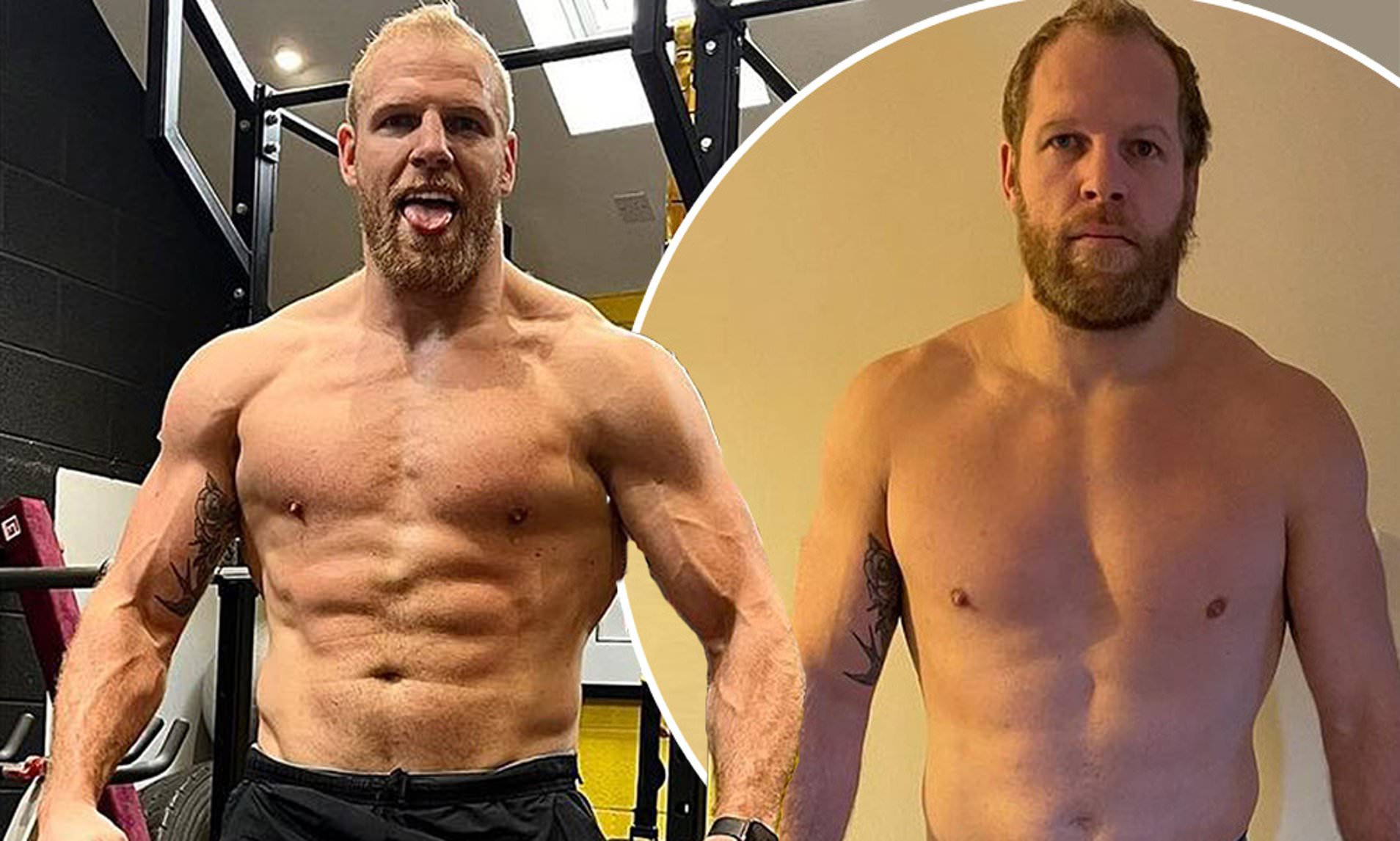
The physical toll of a 17-year professional rugby career is immense. James Haskell has been remarkably transparent about his journey of bodily transition in retirement. He speaks openly about chronic pain, the surgical interventions he has endured, and the daily management required for long-term joint health. This transparency is a public service, stripping away the glamour to reveal the真实代价 of elite collision sport. It provides a crucial, often missing, perspective for young athletes and fans.
His current approach to fitness reflects this hard-won wisdom. He has shifted from performance-based training—focused on power, speed, and size for rugby—to longevity-based training. This emphasizes mobility, functional strength, and recovery. He often discusses conditioning protocols, nutritional adjustments, and the psychological shift from training for something to training for oneself. This evolution offers a blueprint for other retiring athletes struggling to redefine their relationship with their bodies and their health.
Key Takeaway: Haskell’s candid discussion of athletic wear-and-tear and his shift to health-span training provides a vital, realistic model for physical transition in retirement from sport.
The Modern Masculinity Dialogue
James Haskell occupies a unique and sometimes contradictory space in conversations about modern masculinity. His persona is traditionally “blokey”—built on rugby, weightlifting, and lad culture. Yet, through his podcast and writing, he engages in surprisingly vulnerable discussions about mental health, relationship dynamics, and personal failure. He embodies a form of evolved masculinity that retains traditionally male-coded interests while rejecting the stoic, emotionally repressed archetype of past sporting generations.
This positioning is strategically astute. It allows him to connect with a broad, often hard-to-reach male demographic on topics like emotional resilience and self-improvement, using the shared language of sport and fitness as an entry point. He normalizes seeking help, embracing vulnerability as a strength, and continuously working on oneself. In doing so, he becomes a influential figure in redirecting masculine culture toward more positive, healthy expressions without alienating his core audience.
Key Takeaway: Haskell serves as a credible bridge, using the vernacular of traditional masculinity to promote a more progressive, emotionally intelligent model of male self-development.
Analysis of Career Pivots and Strategic Decisions
A table mapping key inflection points in Haskell’s career reveals the strategic pattern behind what may seem like disparate moves:
| Career Phase | Key Decision / Pivot | Apparent Risk | Strategic Rationale & Long-Term Outcome |
|---|---|---|---|
| Mid-Playing Career | Proactive cultivation of media & DJ profile | Brand dilution, being seen as unserious | Diversification of public identity. Built audience & revenue streams separate from rugby, enabling smoother retirement transition. |
| Immediate Post-Retirement | Full commitment to podcasting & reality TV | Overexposure, pegging legacy to entertainment | Monetization of personality capital. Cemented mainstream fame, expanded demographic reach far beyond rugby fans. |
| Business Development | Investing in/co-founding health & wellness brands | Financial risk, potential failure | Adjacency leverage. Used core athletic expertise to build credible, authority-driven businesses in a growing market. |
| Content Evolution | Shifting podcast focus to mindset & life advice | Alienating listeners seeking pure rugby content | Establishing expert authority. Moved from “former player” to “performance thinker,” creating evergreen, scalable content niche. |
Key Takeaway: Every major pivot in Haskell’s career, even the seemingly risky ones, can be traced to a long-term strategy of diversifying income, leveraging core expertise, and building sustainable authority.
The Synergy of Sport and Business Discipline
The through-line connecting the rugby flanker and the entrepreneur is a non-negotiable discipline. Haskell has repeatedly transferred the regimented mindset of athletic preparation to his business and personal projects. The concept of showing up, doing the repetitive work, reviewing performance, and iterating—central to sports training—is directly applicable to building a company, creating content, or managing a personal brand. He treats his post-retirement career with the same seriousness as his match preparation.
This is encapsulated in his approach to podcasting. He doesn’t just “have a chat”; he prepares topics, structures shows for flow, and consistently delivers content on schedule. It is a professional production. This disciplined application prevents his ventures from becoming mere hobbies or vanity projects. It ensures quality and reliability, which in turn builds trust with audiences and business partners. The synergy lies in understanding that the foundational habits of elite performance are universally transferable.
Key Takeaway: The core differentiator in Haskell’s post-sport success is the deliberate application of athletic discipline—consistency, preparation, review—to all his new ventures.
An authoritative figure in sports marketing, Simon Dent of Dark Horses agency, once observed: “The smartest athletes today are architects of their future selves from day one. They view their sporting career as the first chapter in a portfolio of working life, not the entire book. That mindset shift is everything.” This quote perfectly frames the strategic foresight exhibited by James Haskell.
Seann Walsh: The Comedian’s Journey Through Laughter, Controversy, and Reinvention
Legacy and Cultural Impact
Assessing the legacy of James Haskell requires a dual lens. His rugby legacy is secure: a durable, effective England international, a Lion, and a club stalwart. His cultural impact, however, is still being written and may ultimately prove more significant. He is pioneering a template for the 21st-century athlete’s retirement: proactive, entrepreneurial, multimedia-savvy, and intellectually curious. He demonstrates that life after sport can be not a diminishment, but an expansion into new arenas of influence.
This impact extends to how young athletes now view their own careers. The path of quiet retirement is no longer the only model. Haskell shows that with strategy, work ethic, and a willingness to be multifaceted, an athlete can build a compelling second act. He has expanded the very notion of what a former player can be—a businessman, a media host, a mental performance advocate. In doing so, he has redefined success in the post-athletic journey.
Key Takeaway: Haskell’s most profound legacy may be the viable, ambitious blueprint he has created for athletic life after retirement, changing expectations for future generations.
Actionable Checklist for Career Transition
Before considering the final conclusion, professionals and athletes can assess their own transition readiness with this framework, inspired by the Haskell model:
- Audit Your Core Expertise: List the non-obvious skills honed in your current role (e.g., resilience, team dynamics, performance under pressure).
- Build Adjacent Bridges Early: Identify and begin engaging with interests or industries that logically connect to your core expertise, before you need to transition.
- Develop a Content Voice: Start sharing your perspectives via a low-friction platform (blog, podcast, newsletter) to build an audience and clarify your thinking.
- Diversify Your Network: Consciously connect with people outside your immediate industry to gain perspective and uncover opportunities.
- Embrace Personal Branding: Define what you stand for and consistently communicate it across your professional presence.
- Apply Foundational Discipline: Transplant the productive habits from your primary career (punctuality, consistency, review) into new ventures.
- Plan for the Long Game: Make decisions that build assets and authority over years, not just quick wins.
Conclusion
The journey of James Haskell from the rugby pitch to the boardroom, the podcast studio, and the public discourse on performance is a masterclass in intentional reinvention. It dismantles the archaic notion of the retired athlete fading into obscurity. His path illustrates that the value of elite sport is not confined to trophies and caps, but in the transferable capital of discipline, resilience, and strategic thinking. He has meticulously converted the currency of sporting credibility into a diversified portfolio of influence.
Ultimately, Haskell’s story is less about rugby or business specifics and more about the psychology of adaptation. It teaches that identity can be fluid, that expertise in one domain can fund exploration in another, and that a public persona can be both authentic and strategically constructed. He has navigated the fraught passage from a defined, narrow excellence to a broad, self-authored success with notable agility. The narrative of James Haskell, therefore, stands as a compelling, modern parable on building a life of impact that extends far beyond the confines of a single field of play.
Frequently Asked Questions
What are James Haskell’s most significant achievements in rugby?
James Haskell earned 77 caps for England, representing his country in multiple Rugby World Cups and Six Nations campaigns. He was selected for two British & Irish Lions tours (2013 to Australia, 2017 to New Zealand) and enjoyed a storied club career, most notably winning the English Premiership and European Cup with London Wasps. His reputation was built as a physically dominant and relentless blindside flanker.
How has James Haskell built a career after rugby?
James Haskell proactively built a multi-platform career by leveraging his personal brand. Key pillars include co-hosting the highly successful The Good, The Bad & The Rugby podcast, strategic entrepreneurship in the health and wellness sector, engaging in television work, and establishing himself as an authoritative voice on performance mindset and mental resilience for a broad audience.
What business ventures is James Haskell involved in?
James Haskell has co-founded and invested in several businesses, primarily in the fitness and wellness adjacency space. This includes supplement companies, a clothing brand, and tech-focused wellness startups. He approaches these ventures as an active founder and stakeholder, applying the discipline from his rugby career to the world of commerce.
Why is James Haskell considered a controversial figure?
James Haskell often engages in public discourse with direct and unfiltered opinions on topics ranging from rugby governance to gender dynamics in sport and modern masculinity. This willingness to take firm, sometimes provocative, stands generates debate and controversy, which he manages as part of his authentic, straight-talking personal brand strategy.
What can professionals learn from James Haskell’s approach?
The core lesson from James Haskell’s approach is the strategic transfer of discipline and the early diversification of identity. Professionals can learn to view their core career as a foundation of skills and credibility, and to intentionally build “adjacent possible” interests and platforms early, ensuring a smoother, self-directed transition into future chapters of their working lives.
About the Author