Gary Carr: From London Stages to International Acclaim
Gary Carr is a name that resonates with a rare quality in the acting world: captivating versatility. An actor who effortlessly dissolves into his roles, he has built a career defined not by typecasting, but by a chameleonic ability to traverse genres, eras, and accents with impeccable precision. From the smoky newsrooms of 1950s London to the lavish estates of the Edwardian aristocracy and the gritty, transformative streets of 1970s New York, Gary Carr has consistently chosen parts that challenge both himself and the audience’s perceptions. This article delves deep into the journey of this remarkable performer, exploring the pivotal roles, the disciplined craft, and the quiet impact of an artist who prefers to let his work speak volumes. We will unravel the narrative of his rise from British television to becoming an internationally recognized talent, a journey marked by critical acclaim and a dedicated global following.
Early Life and Theatrical Foundations
Long before he became a familiar face on television screens across the globe, Gary Carr was honing his craft on the stages of London. His early passion for performance was not a fleeting interest but a dedicated pursuit, one that led him to the prestigious Guildhall School of Music and Drama. This foundational training provided him with the rigorous technical skills and emotional depth required for a sustained career in acting, grounding him in classical techniques while fostering the creative fearlessness he is known for today. It was within this demanding environment that he developed the actor’s toolkit—voice control, physical presence, and textual analysis—that would later become the invisible bedrock of every character he portrays.
His professional journey began in the theatre, a proving ground for many of Britain’s finest actors. Carr appeared in productions for the Royal Shakespeare Company and at the National Theatre, tackling complex works by Shakespeare and his contemporaries. These roles were not merely jobs but essential apprenticeships, demanding a level of stamina, vocal projection, and emotional immediacy that film and television rarely require. This period was crucial in shaping his approach, teaching him how to build a character from the ground up and hold the attention of a live audience, skills that would make the transition to screen acting feel like a natural, albeit different, progression for the young performer.
Breakthrough Role in ‘The Hour’
The turning point in Gary Carr‘s career arrived with the BBC’s critically acclaimed drama, ‘The Hour’. Set in the competitive world of a 1950s London newsroom, the series was a masterclass in tension, style, and character-driven storytelling. Carr was cast as Thomas Kish, a Jamaican-British journalist who navigates the entrenched prejudices and professional rivalries of the era with intelligence, grace, and unshakable integrity. This was not a minor supporting part but a complex, integral character whose presence challenged the status quo both within the narrative of the show and in the landscape of British period drama itself. The role demanded a nuanced performance, requiring Carr to convey a simmering intelligence and quiet dignity in the face of overt racism and professional obstruction.
His portrayal of Thomas Kish was a revelation, instantly marking him as a actor of significant substance and subtlety. Gary Carr brought a layered humanity to Kish, avoiding clichés and instead presenting a man who was both a product of his time and ahead of it. The performance earned him widespread critical praise and brought his talent to the attention of a much broader audience, including international producers and casting directors. It was this role that demonstrated his ability to anchor a storyline with emotional weight and intellectual heft, proving he could hold his own alongside established stars like Dominic West and Romola Garai. ‘The Hour’ was the catalyst, the project that unequivocally announced his arrival as a leading man in the making.
Stealing Scenes in ‘Downton Abbey’
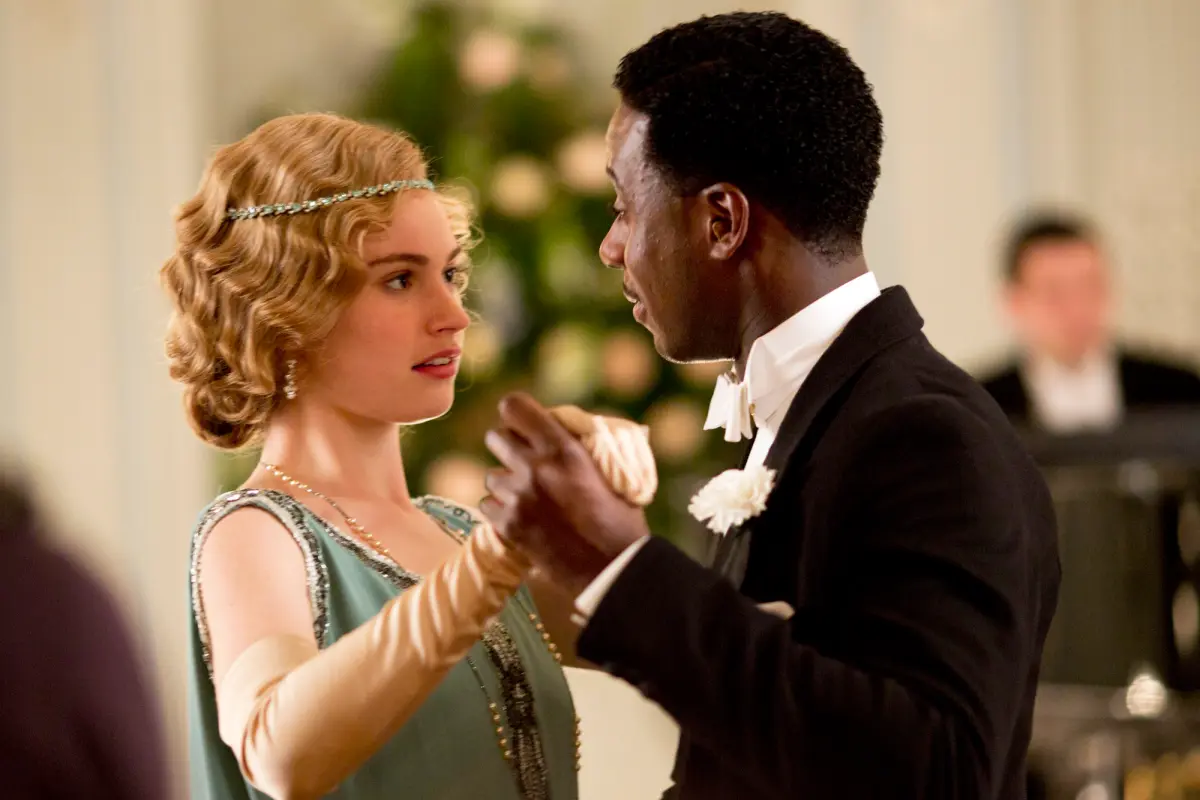
If ‘The Hour’ introduced Gary Carr to a discerning audience, his entry into the global phenomenon of ‘Downton Abbey’ catapulted him into the international spotlight. Joining the cast in its fourth season, Carr was tasked with the role of Jack Ross, a charismatic and sophisticated jazz singer who becomes a love interest for Lady Rose MacClare. The character of Jack Ross was groundbreaking for the series, introducing themes of interracial romance and class conflict within the rigid social hierarchy of 1920s Britain. For a show renowned for its meticulous attention to historical detail, the inclusion of a successful, confident Black artist was a bold and significant narrative choice, one that Gary Carr executed with immense charm and gravitas.
His performance brought a fresh, vibrant energy to the venerable halls of Downton. As Jack Ross, Gary Carr was more than just a plot device; he was a fully realized character whose presence exposed the prejudices and complexities of the era. He carried himself with an effortless cool and a soulful demeanor that made his scenes magnetic, particularly the musical performances where he showcased his own singing voice. The role required a delicate balance, portraying a man who was both aware of the social barriers placed before him and yet unwilling to be defined by them. This stint on one of the world’s most beloved television shows cemented his status as a versatile and compelling actor, earning him a permanent place in the hearts of millions of viewers and demonstrating his unique ability to seamlessly integrate into an established ensemble and still stand out.
Mastering Accents and Physicality
One of the most telling signs of a committed actor is their dedication to the technical nuances of a role, and for Gary Carr, this mastery is most evident in his command of accents and physical transformation. His performance in HBO’s ‘The Deuce’ serves as a prime example, where he adopted a flawless American accent to play CC, a complex and intimidating pimp in 1970s Times Square. The accent wasn’t merely a surface-level imitation; it was imbued with the specific cadence, slang, and rhythm of the streets his character inhabited. This vocal work was integral to building a believable and terrifying persona, allowing audiences to fully suspend their disbelief and see the British actor disappear completely into the role of a menacing American figure.
Beyond vocal technique, Gary Carr understands that a character lives in the body as much as in the voice. For CC, he adopted a specific physicality—a predatory grace, a coiled tension in his posture, and a gaze that could shift from charming to lethal in an instant. This commitment to physical transformation is a thread throughout his career, from the elegant posture of a jazz singer in ‘Downton Abbey’ to the weary, world-wise demeanor of a London detective. He approaches each role as a holistic creation, building the character from the inside out and ensuring that every external detail, from the way he stands to the way he speaks, serves the internal truth of the person he is portraying.
The Demanding Role of CC in ‘The Deuce’
Portraying CC in David Simon’s ‘The Deuce’ was arguably the most challenging and transformative role of Gary Carr‘s career. The series, a gritty exploration of the birth of the porn industry in 1970s New York, required him to embody a character of profound moral ambiguity and chilling volatility. CC was not a villain written for easy audience dismissal; he was a complex, charismatic, and deeply troubled individual, a product of a brutal environment who perpetuated its cycles of violence. This role was a dramatic departure from the more polished characters he had played previously, demanding a deep psychological dive into darkness and a fearlessness that few actors possess. It was a testament to Carr’s range and his refusal to be pigeonholed.
To prepare for the intensity of the part, Gary Carr engaged in extensive research, immersing himself in the history and culture of the era to understand the socio-economic forces that shaped men like CC. He worked meticulously on the distinct New York accent and the manipulative, often violent, patterns of speech and behavior. The performance was physically and emotionally draining, requiring him to tap into a reservoir of anger and menace that was far removed from his own personality. Yet, he never allowed CC to become a one-dimensional monster; he found the flickers of humanity, the warped logic, and the desperate survival instincts that made the character tragically believable. This role stands as a towering achievement in his filmography, a bold choice that showcased his depth and courage as an artist.
Film Work and Cinematic Range
While television has provided Gary Carr with some of his most iconic roles, his work in film demonstrates a similarly thoughtful and varied approach to selecting projects. His cinematic appearances, though less frequent, are carefully chosen and showcase his ability to adapt to different tones and narrative scales. From independent British dramas to larger Hollywood productions, he brings the same level of commitment and precision to the big screen. Each film role adds a new shade to his artistic palette, proving that his talent is not confined to the serialized storytelling of television but is equally potent within the condensed narrative arc of a feature film.
In movies like ‘The Woman in Black 2: Angel of Death’ and ‘Toledo’, Gary Carr has shown his comfort within the horror and thriller genres, respectively, using his strong screen presence to create memorable characters even with limited screen time. These roles often rely on his ability to convey a deep sense of empathy or underlying tension, skills he honed in his theatrical and television work. His film career is not about chasing blockbuster fame but about participating in interesting stories with compelling filmmakers. This selective strategy ensures that each cinematic outing contributes meaningfully to his body of work, building a filmography that is defined by quality and diversity rather than sheer volume.
Stage Work and Returning to Roots
Despite his success on screen, Gary Carr has maintained a strong connection to his theatrical roots, periodically returning to the stage where his career began. This cyclical return to live performance is a conscious choice for many serious actors, a way to recalibrate and reconnect with the immediate, unmediated exchange of energy that only theatre can provide. For an actor of his caliber, the stage is not a relic of the past but a vital creative gymnasium, a place to stretch artistic muscles and tackle material that is often more linguistically and emotionally dense than typical screenplays. His continued work in theatre underscores a profound respect for the craft itself, beyond the glitz of premieres and the allure of celebrity.
His performances in productions for institutions like the Royal Shakespeare Company demand a different kind of discipline than film or television. There are no second takes, no editing room safety nets. Every night, the actor must deliver a performance that is both fresh and technically controlled, a feat that requires immense concentration and emotional availability. For Gary Carr, this process is invigorating. It allows him to explore a character’s journey in a continuous arc, night after night, discovering new nuances with each performance. This dedication to the stage informs his screen work, keeping his instrument sharp and his performances grounded in a classical tradition that values the power of the spoken word and the authenticity of human presence.
Maxine Dwyer: The Definitive Guide to Her Life, Career, and Enduring Legacy
The Art of Character Selection
A closer look at the career trajectory of Gary Carr reveals a strategic and intuitive approach to selecting roles. There is no apparent pattern of playing it safe or chasing commercially guaranteed projects. Instead, his filmography reads like a map of an artist deliberately seeking out challenges and opportunities for growth. He seems drawn to characters that exist at the intersection of social commentary and personal drama, roles that allow him to explore the human condition within specific, often fraught, historical or contemporary contexts. This discerning choice is a key component of his sustained relevance and artistic integrity in a notoriously fickle industry.
He has spoken about the importance of a character’s narrative purpose and the overall quality of the script. For Gary Carr, a role must offer more than just lines; it must present a psychological puzzle to solve, a unique voice to master, or a physicality to embody. He avoids repetition, consciously moving from the charm of Jack Ross to the menace of CC to the weary determination of a modern detective. This calculated diversity prevents audience fatigue and keeps his work exciting and unpredictable. It is a long-game strategy, prioritizing a rich and varied body of work over short-term typecasting, ensuring that his career will be studied and appreciated for its breadth and intelligence long into the future.
Public Persona and Private Life
In an era of constant social media exposure and celebrity oversharing, Gary Carr maintains a notably low profile. He is an actor who is definitively known for his work, not for his personal life or public statements. This deliberate separation between the public artist and the private individual is a conscious choice, one that allows the audience to fully invest in his characters without the distraction of off-screen persona. He grants few interviews and uses social media sparingly, if at all, focusing the public’s attention squarely on the performances he creates rather than on the individual who creates them. This old-school approach to fame is increasingly rare and reflects a deep-seated belief in the primacy of the work itself.
This privacy is not aloofness but a professional philosophy. By keeping his personal life out of the spotlight, Gary Carr preserves the mystery and malleability that are essential to his craft. When an audience knows too much about an actor’s real-life opinions, habits, or personality, it can become more difficult for them to believe in the character being portrayed. His choice to remain an enigma off-screen empowers his transformations on-screen. It is a testament to his confidence that his artistry is compelling enough to sustain a successful career without the need for supplemental publicity or personal branding, a quality that commands a significant amount of respect from both his peers and his audience.
Critical Reception and Industry Impact
The critical response to Gary Carr‘s work has been consistently positive, often tipping into glowing admiration for his depth and versatility. Reviewers frequently highlight his “magnetic screen presence,” “chameleonic ability,” and the “quiet intensity” he brings to every role. From his early days in ‘The Hour’, critics took note of his subtle power, and with each subsequent performance, the praise has only grown more substantial. His work in ‘The Deuce’, in particular, was singled out as a career-defining turn, with many commentators noting the breathtaking leap he made from the charming crooner in ‘Downton Abbey’ to the terrifying pimp in the HBO drama.
His impact on the industry, while subtle, is significant. Gary Carr represents a new generation of British actors who are effortlessly crossing over to international success without losing their artistic identity. He has broken barriers by taking on roles that challenge stereotypical representations of Black men in period dramas and contemporary series alike. By choosing complex, often morally ambiguous characters, he has expanded the narrative possibilities for actors of color, proving that their stories can and should be central, complex, and multifaceted. His career path serves as an inspiration and a blueprint for aspiring actors, demonstrating that sustained success is built on a foundation of rigorous training, strategic choices, and an unwavering commitment to the truth of each character.
Gary Carr’s Acting Methodology
While Gary Carr is not an actor who publicly dissects his process in great detail, the evidence of a sophisticated methodology is clear in the consistency and depth of his performances. He appears to be a practitioner of a hybrid technique, drawing from his classical training for structure and discipline while likely incorporating elements of method acting to achieve the raw emotional truth required for roles like CC. His preparation is evidently meticulous, involving deep research into the historical context of a piece, linguistic work for accents, and a physical regimen to embody the character’s posture and movement. This thorough groundwork allows him to then live truthfully within the imaginary circumstances of the scene.
There is a palpable sense of listening and reacting in his performances, a key indicator of an actor who is fully present in the moment. He understands that acting is not just about delivering lines but about embodying a human being who thinks, feels, and responds in real time. This creates a dynamic and authentic performance that feels less like a recitation and more like a captured reality. A fellow actor once noted of his process, “He does all the work beforehand so he can be free in the moment.” This approach allows Gary Carr to balance technical control with spontaneous creativity, resulting in characters that are both precisely crafted and vibrantly alive.
Comparison of Key Gary Carr Roles
The following table provides a structured overview of the pivotal roles that have defined Gary Carr‘s career, highlighting the diversity of his choices and the specific skills required for each character.
| Character & Show/Film | Era/Genre | Core Character Traits | Key Acting Challenges |
|---|---|---|---|
| Thomas Kish (‘The Hour’) | 1950s, Drama/Thriller | Intelligent, dignified, resilient, principled | Portraying quiet strength against prejudice, mastering period-specific demeanor, conveying internal conflict. |
| Jack Ross (‘Downton Abbey’) | 1920s, Period Drama | Charismatic, sophisticated, trailblazing, romantic | Mastering a jazz singer’s physicality and singing voice, navigating a groundbreaking interracial storyline with nuance. |
| CC (‘The Deuce’) | 1970s, Crime Drama | Menacing, charismatic, volatile, complex | Adopting a flawless American accent, embodying terrifying physicality, exploring deep psychological darkness. |
| DI Tim Achebe (‘The Following Events’) | Present Day, Crime Thriller | Weary, intuitive, methodical, morally grounded | Leading a series, driving a complex narrative, portraying a detective’s psychological burden and deductive process. |
Future Projects and Career Trajectory
Given his track record of thoughtful role selection, the future projects of Gary Carr are eagerly anticipated by fans and critics alike. While he keeps his upcoming work closely guarded, his career trajectory suggests a continued path toward even more complex and challenging lead roles. It is not difficult to imagine him transitioning into major feature film dramas, limited series with acclaimed auteurs, or even returning to the West End or Broadway in a star-making theatrical turn. His talent and credibility make him a strong candidate for awards-caliber work, and it seems only a matter of time before he receives major individual accolades for his performances.
The evolution of Gary Carr as an artist points toward a potential future behind the camera as well. Actors with his depth of understanding regarding narrative, character, and performance often find a natural progression into directing or producing. This would allow him to shape stories from their inception, curating projects that align with his artistic vision and perhaps creating opportunities for other underrepresented voices. Regardless of the specific path he chooses, his career will undoubtedly continue to be defined by a pursuit of excellence, a refusal to be categorized, and a quiet, powerful impact on the landscape of contemporary acting.
Conclusion
In a profession often dominated by hype and fleeting trends, Gary Carr has carved out a space that is entirely his own. He is an actor’s actor, a performer whose name is a synonym for quality, integrity, and transformative power. From his solid theatrical foundations to his scene-stealing turns in television megahits and his fearless embrace of dark, complex characters, he has built a body of work that is both impressive and inspiring. He demonstrates that true success in acting is not merely about visibility but about the lasting impression one leaves through a commitment to craft and the courage to continually reinvent oneself. The story of Gary Carr is still being written, but each chapter thus far confirms his status as one of the most compelling and respected talents of his generation.
Frequently Asked Questions
What is Gary Carr best known for?
Gary Carr is best known for his standout roles in major television series. He gained widespread recognition for playing Jack Ross, the jazz singer, in the global phenomenon ‘Downton Abbey’, and later delivered a critically acclaimed, transformative performance as CC, the intimidating pimp, in HBO’s ‘The Deuce’. His earlier breakout role was as journalist Thomas Kish in the BBC drama ‘The Hour’.
Where is Gary Carr from and what is his background?
Gary Carr is from London, England. He is a classically trained actor, having studied at the prestigious Guildhall School of Music and Drama. This strong theatrical foundation is a key element of his success, providing him with the technical skills and discipline he has applied to a wide range of screen roles throughout his career.
Does Gary Carr do his own singing?
Yes, Gary Carr is a talented singer and performed his own musical numbers in ‘Downton Abbey’. His portrayal of jazz singer Jack Ross required him to deliver authentic vocal performances, which he executed with a smooth, charismatic style that added a significant layer of authenticity to the character and the era.
How did Gary Carr prepare for his role in ‘The Deuce’?
Preparing for the role of CC in ‘The Deuce’ was an intensive process for Gary Carr. It involved extensive research into the 1970s Times Square environment, mastering a specific New York accent, and developing a threatening physicality. He delved deep into the psychology of the character to portray his volatility and complexity in a believable and chilling manner.
What makes Gary Carr such a respected actor?
Gary Carr has earned respect through his chameleonic versatility, meticulous preparation, and intelligent role selection. He completely immerses himself in each character, mastering accents and physicality while delivering nuanced, emotionally truthful performances. His ability to move seamlessly between genres and eras without being typecast demonstrates a rare and admired level of artistic range and integrity.
About the Author