Frank Soo: England’s First Non-White International and a Footballing Legend Lost to Time
The annals of football history are filled with iconic names, their stories told and retold until they become legend. But for every famous star, there are pioneers whose tales have been unjustly faded by the passage of time. Among the most significant, and overlooked, is the story of Frank Soo. A stylish wing-half of the 1930s and 1940s, Frank Soo was not just a supremely talented footballer; he was a trailblazer who shattered barriers, becoming the first person of non-European heritage to play for the England national team. His is a narrative of exquisite skill, wartime heroism, and a globetrotting managerial career that should have cemented his place in the sport’s hall of fame. Yet, for decades, his remarkable contributions were largely forgotten. This is the comprehensive story of the man, the myth, and the enduring legacy of Frank Soo.
Early Life and Roots
Frank Soo was born in Buxton, Derbyshire, in 1914, to a Chinese father, Quan Soo, and an English mother, Beatrice. His father was a seafarer who ran a laundry business, placing the family within a small but significant Chinese community in early 20th-century Britain. Growing up in Liverpool, young Frank was immersed in a port city culture that was more diverse than most of the country, yet he would have still faced the pervasive prejudices of the era. It was on the streets and pitches of Merseyside that his extraordinary talent for football first began to shine, a talent that would soon transcend the social barriers of the time.
His mixed heritage made him a unique figure in a sport that was almost exclusively white. Despite the potential for discrimination, his ability with a football at his feet was undeniable. He joined Prescot Cables after leaving school, but it was his performances for this local club that caught the eye of scouts from one of England’s biggest teams. His background, rather than being a hindrance to be hidden, became an unspoken part of his identity—a quiet testament to his resilience and the unifying power of sport that he would embody throughout his life.
Rising Star at Stoke City
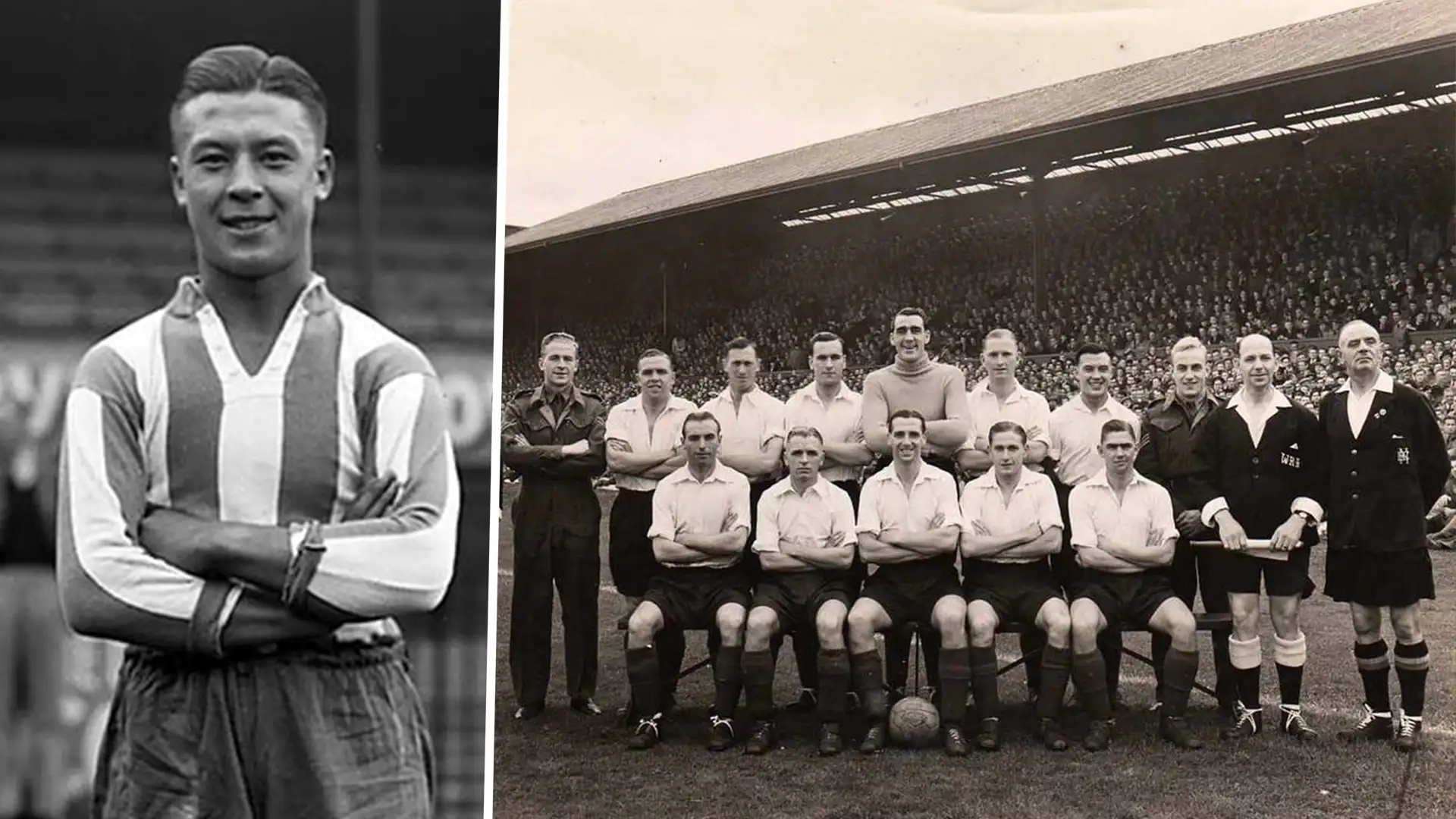
Frank Soo signed for Stoke City in 1933, a period when the club was building a formidable team known as the “Bread Men.” He made his first-team debut that same year and quickly established himself as an integral part of the side. Soo was a graceful and intelligent left-half, renowned for his impeccable passing, visionary through-balls, and mastery of the dead ball. His technical prowess and footballing brain made him a fan favourite at the Victoria Ground, where he formed a legendary half-back line with the towering Bob McGrory and the combative Joe Johnson.
His influence was pivotal in Stoke’s rise to prominence. The team challenged for the First Division title and reached the FA Cup semi-finals in 1935, with Soo’s creativity and composure in midfield being central to their success. He was a professional in an age of part-time butchers and bakers, a player whose sophisticated understanding of the game elevated those around him. During his tenure at Stoke, he made over 200 appearances, cementing his reputation as one of the most gifted midfielders in English football and making his subsequent international call-up an inevitability.
An Historic England Debut
The pinnacle of Frank Soo‘s domestic career came on a chilly day in November 1942, at Ninian Park in Cardiff. In a wartime international against Wales, he took to the field wearing the Three Lions of England. This was not an official FIFA-cap match due to the circumstances of World War II, but it was a full, recognised international fixture for the British Home Championship. In doing so, he made history, breaking the ethnic barrier for the England national team a full 56 years before players like Sol Campbell and Rio Ferdinand became regulars.
This landmark achievement, however, was not heralded with the fanfare one might expect. The country was at war, and football, while a vital morale booster, was not the focus of national media attention it is today. His selection was based purely on merit and his outstanding performances for Stoke City. He would go on to make eight further appearances for England during the war years, captaining the side on one occasion. Despite this, his status as a pioneer was largely unrecorded, and his name faded from the popular history of the English game for many years.
Wartime Service and Guest Appearing
Like so many of his generation, Frank Soo‘s prime footballing years were interrupted by the outbreak of the Second World War. He served as a physical training instructor in the Royal Air Force, continuing to play football whenever his duties permitted. During this period, the formal football league structure was suspended, replaced by regional leagues and cup competitions. Players would often “guest” for clubs close to their postings, and Soo turned out for a remarkable array of teams, including Everton, Chelsea, Millwall, and Newcastle United.
These guest appearances further solidified his reputation across the country. Fans of other clubs were able to witness his elegant style and technical mastery firsthand. He also played in numerous charity and fundraising matches, using his fame to support the national war effort. This period, while disruptive to his official career statistics, demonstrated his immense character and versatility. It also meant that his talent was appreciated on a national scale, far beyond the confines of Stoke-on-Trent, making him a household name in wartime Britain.
A Pioneering Managerial Journey
After the war, Frank Soo embarked on a second, equally pioneering career as a manager and coach. His journey took him across the globe, becoming one of the first British coaches to work extensively in Scandinavia and the Middle East. He began in management with Danish club Esbjerg fB in 1949, where he reportedly introduced novel training methods and tactical ideas. His nomadic career then saw him take charge of clubs in Sweden, including AIK and Oddevold, where he was respected for his modern approach to the game.
His willingness to travel and impart his knowledge in foreign leagues was ahead of its time. He later managed the Norwegian national team in the early 1950s, a significant honour that underscored the high regard in which he was held abroad. This globetrotting phase of his life stands in stark contrast to the more insular focus of most British football figures of the era. Frank Soo was a true footballing citizen of the world, leveraging his expertise and reputation to build a unique legacy far from his home shores.
The Stylist of the Pitch
On the field, Frank Soo was often described as a “stylist.” In an era often characterised by robust, physical football, he stood out for his grace and intelligence. He was not a player known for crunching tackles or relentless running; his game was built on spatial awareness, precise distribution, and an uncanny ability to control the tempo of a match. His signature move was the disguised pass, a feint to play the ball one way before sliding it into an unexpected path for a teammate, a skill that delighted crowds and bewildered opponents.
His expertise from set-pieces was another hallmark of his game. In a time before the modern, meticulously rehearsed free-kick routines, Soo was a dead-ball specialist whose corners and free-kicks were a consistent source of goals for his teams. He brought a cerebral quality to the pitch that was rare and highly valued. Former teammates and opponents spoke of his “football brain,” his ability to read the game several moves ahead, making him the strategic heartbeat of every side he represented.
The Context of His Heritage
To understand the full magnitude of Frank Soo‘s story, one must consider the social and historical context of his Chinese heritage in pre- and post-war Britain. The Chinese community was small and often faced with suspicion and stereotypes. While there is little documented evidence of overt racial abuse directed at him on the pitch, he would have undoubtedly navigated a complex social landscape. His success, therefore, was not just sporting; it was a quiet, powerful challenge to the prevailing prejudices of the day.
His identity as a mixed-heritage Englishman in a homogeneous sporting world makes his achievements all the more remarkable. He carried the hopes of a community without it being his explicit burden. A contemporary journalist, capturing the unique nature of his presence, once wrote a line that has since become synonymous with his story: “Soo is a Merseysider of Chinese descent, and when he plays the ball you feel that his ancestors invented the game.” This quote, while a product of its time, reflects the sense of exoticism and wonder he inspired, yet his skill always transcended it.
Gary Carr: The Definitive Guide to the Actor’s Career and Transformative Roles
Post-War Transfers and Later Playing Career
After the war, Soo did not return to Stoke City. He was sold to Leicester City for a fee of £4,500 in 1945, a move that surprised many of his admirers. His time at Leicester was brief, and he soon moved on to Luton Town, then a Second Division side. Later, he had spells with Chelmsford City and finally with Corby Town, where he began his transition into coaching while still playing. These later years were a winding down from the heights of his pre-war fame, as a new generation of players emerged.
These transfers marked the end of his elite playing days, but they also demonstrated his enduring love for the game. He continued to play at a professional level well into his late thirties, a testament to his fitness and dedication. While his legacy was forged at Stoke City and with England, these clubs were also beneficiaries of his vast experience and class. He remained a draw for fans, a living link to a pre-war style of football that was rapidly evolving in the post-war era.
The Scandinavian Coaching Legacy
Frank Soo‘s impact as a coach in Scandinavia was profound and lasting. In Denmark and Sweden, he was seen as a conduit for modern footballing ideas emanating from England, but filtered through his own sophisticated philosophy. At Esbjerg and later with Swedish clubs, he focused on technical drills, tactical discipline, and a passing game that was not the norm in the more physically-oriented Scandinavian leagues. He helped lay the early groundwork for the technical development that would later see nations like Denmark and Sweden become respected forces in world football.
His tenure as the manager of the Norwegian national team from 1952 to 1953, though short, was another historic first. He was one of the earliest foreign coaches to take charge of an international side, paving the way for the global exchange of managerial talent we see today. Although his record with Norway was mixed, his very appointment was a sign of the Norwegians’ desire to learn from a respected figure from a leading football nation. His work there, and across the region, left an indelible, if often uncredited, mark.
The Mystery of His Faded Memory
The question of why Frank Soo was forgotten for so long is a complex one. The primary reason is the nature of his England caps. Because they were awarded during wartime, they were classified as unofficial for many years, and thus not included in the official records of England internationals. This administrative technicality effectively erased his groundbreaking achievement from the mainstream narrative of English football history for decades. Without this key part of his story, he became just another talented pre-war player.
Furthermore, his post-war career took him away from the English football spotlight. While he was coaching in Scandinavia and beyond, the game at home was rebuilding and creating its own new heroes. There was no concerted effort to preserve his legacy at the time, and his pioneering status as a non-white English international was not a story that the football establishment of the day was keen to tell. It is only with recent historical research and a greater interest in the diverse history of the game that his story has been resurrected.
Recognition and Legacy Restoration
Thankfully, the 21st century has seen a long-overdue reassessment of Frank Soo‘s life and career. Historians, journalists, and campaigners have worked tirelessly to bring his story back into the light. In 2003, the Stoke City Former Players’ Association successfully campaigned to have his wartime England caps recognised by the Football Association, a significant step in correcting the historical record. Books, documentaries, and articles have since been produced, ensuring that new generations of fans can learn about this remarkable man.
His legacy is now secure as that of a true pioneer. He is rightly celebrated not only for his skill but for the barriers he broke simply by taking to the field. The Frank Soo story is a vital chapter in the history of English football, a narrative that enriches our understanding of the game’s past and provides an inspiring figure for its future. He is no longer a forgotten man, but a symbol of talent, resilience, and the often-overlooked diversity that has always been a part of British sport.
Frank Soo in Comparative Context
To fully appreciate the singularity of Frank Soo’s career, it is useful to compare his trajectory with that of other trailblazers. The table below places him in the context of other non-white pioneers in British football, highlighting the unique timing and nature of his achievements.
| Pioneer | Era | Club(s) | National Team | Key Achievement & Context |
|---|---|---|---|---|
| Frank Soo | 1930s-1940s | Stoke City, Leicester City | England (1942, wartime) | First non-white player to represent England. A pre-war professional whose career was defined by elite club performance and wartime service. |
| Walter Tull | 1900s-1910s | Tottenham Hotspur, Northampton Town | N/A | One of the first outfield mixed-heritage professionals in the UK. His career was cut short by WWI, in which he was tragically killed in action. |
| Jack Leslie | 1920s-1930s | Plymouth Argyle | N/A (Reportedly selected for England in 1925 but dropped when selectors learned of his heritage) | A prolific striker who was almost certainly denied an England cap due to the colour of his skin, highlighting the barriers Soo later broke. |
| Viv Anderson | 1970s-1990s | Nottingham Forest, Arsenal | England (1978, official) | Officially recognized as the first black player to earn a full England cap in the post-war era, marking a new chapter after the pioneers like Soo. |
The Final Years and Lasting Impact
Frank Soo passed away in 1991 in Cheadle, Staffordshire, at the age of 76. His passing went largely unnoticed by the wider football world, a sad reflection of how far his star had dimmed from its pre-war brightness. He lived long enough to see the game transform, but not to see his own place in its history properly acknowledged and celebrated. His later life was spent away from the spotlight, a private man who had lived an extraordinarily public and impactful life across the globe.
Today, his impact is measured not in trophies or official caps, but in the path he cleared for others. Every time a player of Asian or mixed heritage pulls on an England shirt today, they are walking a path that Frank Soo was the first to tread. His story is a crucial reminder that history is not just about the famous winners, but also about the quiet pioneers whose courage and talent make future progress possible. He is, finally, taking his rightful place in the footballing pantheon.
Conclusion
The story of Frank Soo is more than a historical curiosity; it is a fundamental part of football’s rich and diverse tapestry. He was a player of immense grace and skill, a wartime servant, a globetrotting coach, and above all, a pioneer who broke the colour line for the England national team under the most challenging of circumstances. For too long, his narrative was a footnote, obscured by administrative technicalities and the passage of time. The rediscovery of his life and achievements corrects a historical injustice and gives us a more complete, and more honest, understanding of the beautiful game’s history. Frank Soo is no longer forgotten; he is remembered, celebrated, and rightfully honoured as the true legend he was.
Frequently Asked Questions
Who was Frank Soo?
Frank Soo was a professional footballer who played for Stoke City and other clubs in the 1930s and 1940s. He is most famous for becoming the first person of non-European heritage to play for the England national team, earning his caps during wartime internationals.
How many times did Frank Soo play for England?
Frank Soo made nine appearances for England, all during the Second World War between 1942 and 1945. He also captained the side in one of these matches. For many years, these were considered unofficial, but they are now widely recognised as full international fixtures.
What was Frank Soo’s playing position and style?
He was an elegant and intelligent left-half, known for his exceptional passing range, vision, and mastery of set-pieces. His style was cerebral and graceful, focusing on controlling the game’s tempo rather than physical confrontation, earning him the label of a “stylist.”
What did Frank Soo do after his playing career ended?
After hanging up his boots, Frank Soo embarked on a pioneering managerial career, primarily in Scandinavia. He managed clubs in Denmark and Sweden, and notably served as the head coach of the Norwegian national team in the early 1950s.
Why was Frank Soo forgotten for so long?
His England caps were wartime fixtures, which were not considered official for many decades, causing his landmark achievement to be omitted from the record books. Combined with his post-career move abroad for management, he gradually faded from the mainstream memory of English football until recent historical research revived his legacy.
About the Author