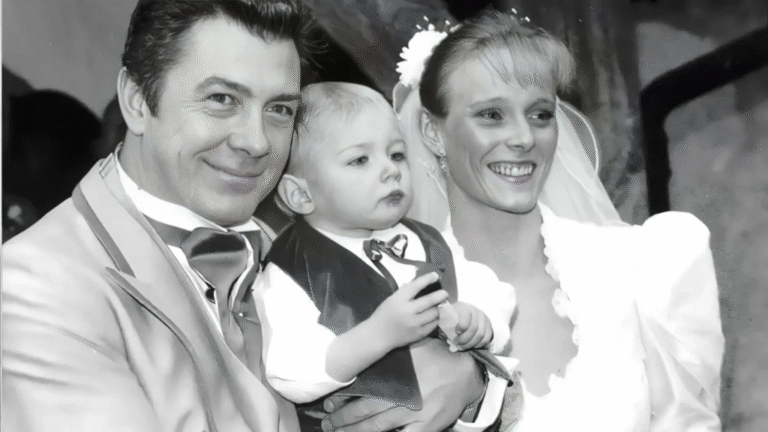
Eddie Kidd: The Gravity-Defying Life of a British Stunt Legend
The world of stunt performance is filled with daredevils, but few names resonate with the raw, charismatic power of Eddie Kidd. In the late 1970s and throughout the 1980s, he was a genuine British superstar, a household name whose death-defying motorcycle jumps captivated millions. He wasn’t just a performer; he was a phenomenon, blending rock-star appeal with a seemingly superhuman courage. His story, however, is one of two profound acts: a spectacular rise to the pinnacle of global stunt work, and an even more powerful, decades-long battle against the aftermath of a catastrophic accident. To understand the man is to understand the very essence of resilience, a journey from soaring through the air to facing life’s greatest challenges with the same indomitable spirit. This is the comprehensive story of the one and only Eddie Kidd.
Early Life and the Genesis of a Daredevil
The origins of a legend often lie in humble beginnings. Born Edward Kidd in 1959 in Islington, North London, his childhood was far from privileged, marked by time in a children’s home. It was there, at the age of twelve, that he first discovered the thrill of motorcycles, an experience that would irrevocably shape his destiny. The raw power and freedom of two wheels spoke to a restless spirit, a young boy already looking for an escape and a way to make his mark on the world, setting the stage for the incredible career of Eddie Kidd.
He left school with minimal formal education and drifted through a series of manual jobs, but his passion for motorcycles was his true compass. He began performing small, self-taught jumps for friends, honing an innate talent for balance and fearlessness. His big break came unexpectedly when he was discovered by a stunt coordinator who saw his raw potential. This pivotal moment launched the young Eddie Kidd from the backstreets of London into the professional arena, where his natural flair and good looks would soon make him a star.
Rise to Stardom and The Jump That Made History
The trajectory of Eddie Kidd’s fame was nothing short of meteoric. He quickly became a regular feature on British television, with his stunts broadcast on popular shows like The Paul Daniels Magic Show and Record Breakers. His charisma was palpable; he wasn’t just a silent daredevil but a charming, articulate young man who connected instantly with audiences. This combination of skill, bravery, and personality made him a media darling and a pin-up for a generation, ensuring that the name Eddie Kidd was synonymous with cool, calculated danger.
While he performed countless jumps, his leap over thirteen double-decker buses at Scratchwood Sands in 1981 cemented his status in the annals of stunt history. This audacious feat, witnessed by a massive live audience and captured for television, broke a world record and directly challenged the dominance of the American stunt king, Evel Knievel. It was a statement of intent, proving that Britain had its own superstar daredevil capable of pushing the boundaries of what was considered possible on a motorcycle.
Hollywood Calling and Silver Screen Stardom
Eddie Kidd’s fame was not confined to the British Isles. His reputation for reliability and spectacular stunt work crossed the Atlantic, leading to a successful foray into Hollywood. His most famous cinematic contribution was doubling for Timothy Dalton’s James Bond in the 1987 film The Living Daylights. The breathtaking sequence involved a motorcycle leap from a moving airplane onto a truck, a stunt that remains iconic in the Bond franchise and showcased Eddie Kidd‘s skill to a global audience.
Beyond Bond, his filmography is a testament to his versatility. He performed stunts in major motion pictures like The Who’s Tommy and The Great Muppet Caper, demonstrating an ability to work within diverse cinematic styles. This period represented the peak of his professional career, where he was not just a stuntman but a sought-after artist, his physical prowess translating into memorable moments of cinematic magic that thrilled audiences worldwide.
The Rivalry That Captivated the World
No discussion of 1980s stunt culture is complete without addressing the public’s fascination with the rivalry between Eddie Kidd and the American legend, Evel Knievel. While often framed as a bitter feud by the media, the reality was more nuanced, a blend of professional competition and mutual respect. Kidd was often positioned as the young, handsome challenger to Knievel’s established, flamboyant throne, a narrative that captivated fans on both sides of the Atlantic and generated immense publicity for the sport.
The rivalry, however, was underpinned by a different philosophy towards the craft. Where Knievel was a showman in a star-spangled suit, Kidd projected a cooler, more focused persona. He was seen as a modern athlete, approaching stunts with a methodical preparation that contrasted with Knievel’s more chaotic style. This distinction was crucial, as it positioned Eddie Kidd not merely as an imitator, but as the evolution of the stuntman, a professional who valued precision as much as spectacle.
The Physics of a Motorcycle Jump
To truly appreciate the skill of a stuntman like Eddie Kidd, one must understand the basic physics at play during a motorcycle jump. The act is a delicate balance of forces, where the rider becomes a projectile. The key is the take-off ramp; hitting it at the correct speed and angle is paramount. Too slow, and the motorcycle falls short; too fast, and the trajectory becomes dangerously high and difficult to control, risking a catastrophic “endo” or front-wheel impact upon landing.
Once airborne, the rider has limited control. They can subtly influence the bike’s pitch using body weight and the throttle, a technique known as “seat bouncing.” The landing, often on a downward-sloping ramp, is the most violent part of the jump, subjecting the rider’s body to immense G-force. For Eddie Kidd, mastering these physics was an intuitive process, a blend of innate talent and relentless practice that allowed him to consistently calculate and execute jumps that others deemed impossible.
The Psychology of Fear and Courage
What separates a stunt performer from the average person is not an absence of fear, but a profound ability to manage it. Eddie Kidd has spoken extensively about the presence of fear, describing it as a necessary companion that sharpens the senses and ensures respect for the danger at hand. The courage he displayed was not a lack of this natural emotion, but the disciplined will to acknowledge it and proceed with the task anyway, a mental fortitude that defined his entire career.
This psychological control was a trained skill, built over thousands of jumps. It involved a hyper-focused state of mind, often described as “flow,” where external distractions fade away and the performer becomes one with the machine and the moment. For Eddie Kidd, this mental preparation was as critical as the physical. He cultivated a deep, unshakeable self-belief, a psychological armor that allowed him to commit fully to stunts where the margin for error was virtually zero.
The Devastating Accident and Life-Altering Injuries
The life of a daredevil is perpetually balanced on a knife’s edge, and on October 2, 1996, that balance was tragically lost. While performing a relatively simple stunt for a show in Hitchin, Hertfordshire, his motorcycle’s throttle stuck open. He was thrown from the bike, suffering a devastating head injury that left him in a coma for seven weeks. The accident resulted in severe brain damage, permanently affecting his speech, mobility, and cognitive functions, irrevocably altering the course of his life.
The aftermath was a grim new reality for the man who had once flown through the air with such grace. He required round-the-clock care and faced a long, arduous journey of rehabilitation with no guarantee of significant recovery. The public who had cheered his leaps now mourned his fate, and the story of Eddie Kidd transformed from one of triumphant risk to one of heartbreaking consequence, showcasing the ultimate price that can be paid in the pursuit of spectacle.
Gary Carr: The Definitive Guide to the Actor’s Career and Transformative Roles
An Unbreakable Spirit and The Long Road to Recovery
If his professional career was a testament to physical courage, Eddie Kidd’s life after the accident became a profound lesson in a different kind of bravery: the courage to endure. Waking from the coma was only the first step in a battle that would last for the rest of his life. Learning to communicate, to move, and to navigate a world that had fundamentally changed required a resilience that dwarfed even his most dangerous stunts, proving the true strength of his character.
Supported unwaveringly by his family, particularly his wife Samantha and his children, he confronted his new challenges with a stubborn determination. His recovery, though partial, has been described as miraculous by those close to him, a testament to his fighting spirit. The man who once defied gravity now had to defy the bleak prognoses of doctors, demonstrating that the core of Eddie Kidd—his will—remained unbroken, even if his body was severely damaged.
Legacy and Influence on Modern Stunt Culture
The influence of Eddie Kidd on subsequent generations of stunt performers is immense and enduring. He helped professionalize the industry in the UK, demonstrating that stunt work was a legitimate and skilled profession, not just a reckless hobby. His success paved the way for British stuntmen and women to gain recognition and respect on the world stage, inspiring countless others to pursue careers in film and live performance, ensuring his techniques and ethos were passed down.
His approach—combining athleticism, showmanship, and meticulous planning—became a new standard. Modern stars of the stunt world, from the teams behind major Hollywood blockbusters to the riders in the X Games, stand on the shoulders of pioneers like him. The legacy of Eddie Kidd is not just in the records he broke, but in the professional pathway he carved, proving that a daredevil could also be a disciplined artist and a respected athlete.
Public Perception and Media Portrayal
The media’s relationship with Eddie Kidd has been a complex narrative in itself. During his heyday, he was portrayed as a golden boy, a working-class hero who achieved fame through sheer guts and talent. The press celebrated his triumphs and amplified his rivalry with Knievel, building a legend that captivated the nation. He was a constant presence in tabloids and magazines, his good looks and charm making him a celebrity beyond the world of stunts.
Following his accident, the media narrative shifted to one of tragedy and, later, inspiration. Stories covered his financial struggles, his family’s dedication, and his slow, hard-won progress. This long-term public interest is a testament to the deep connection he forged with the British people. The enduring fascination with Eddie Kidd reflects a collective memory of his brilliance and a profound respect for his ongoing battle, making his story one of the most poignant in British popular culture.
A Comparison of Stunt Icons: Eddie Kidd and Evel Knievel
The perceived rivalry between Eddie Kidd and Evel Knievel offers a fascinating study in contrasts. While both were masters of the motorcycle jump, their styles, personas, and approaches to their craft were markedly different. The following table breaks down the key distinctions between these two legends, highlighting how each uniquely defined the role of the stunt daredevil for their respective eras and audiences.
| Feature | Evel Knievel | Eddie Kidd |
|---|---|---|
| Nationality | American | British |
| Persona | The Flamboyant Showman: Capes, star-spangled suits, a carnival barker’s bravado. | The Cool Athlete: Leathers, a more reserved and focused demeanor, rock-star appeal. |
| Primary Era | 1960s – 1970s | 1970s – 1980s |
| Approach to Stunts | High-risk, often chaotic; known for spectacular crashes as well as successes. | Methodical and calculated; emphasized planning and control to ensure a higher success rate. |
| Public Image | A rebellious, controversial folk hero who courted both admiration and notoriety. | A beloved national treasure and a pin-up, seen as a more professional and relatable figure. |
| Legacy | Defined the modern daredevil as a populist entertainment concept. | Professionalized the role, elevating stunt performance towards a disciplined athletic pursuit. |
This comparison is not about declaring a winner, but about appreciating how each man reflected their culture and time. Knievel embodied the rebellious, individualistic spirit of post-war America, while Kidd represented a new, more polished and professional European approach to extreme performance. Both, however, shared the same fundamental courage and left an indelible mark on the world.
The Financial Realities of a Stunt Career
The glamorous perception of a stunt performer’s life often belies a harsh financial reality. While at the peak of his fame, Eddie Kidd commanded significant sums for his jumps and film work, the income was inherently unstable. Unlike a salaried actor, a stuntman is paid per job, with fees having to cover agents, equipment, training, and insurance—a notoriously expensive necessity in such a high-risk profession. The financial peaks could be high, but the valleys were deep and unpredictable.
This volatility had lasting consequences, especially after his accident. With his earning capacity abruptly ended, Kidd faced immense financial hardship, relying on benefits and the support of public fundraising efforts to cover his extensive medical and care costs. His story serves as a sobering reminder of the precariousness of even the most celebrated stunt careers, where a single moment can erase not only physical health but also financial security.
The Role of Family and Support Systems
Behind every great individual is a network of support, and for Eddie Kidd, this has been his family. His parents stood by him during his risky early career, and later, his wives and children provided the foundation of his life. Following his accident, this support system became his lifeline. His then-wife, Samantha, dedicated herself to his care, becoming his fiercest advocate and managing the immense challenges of his rehabilitation with unwavering devotion.
The importance of this familial bond cannot be overstated in his story. It provided the love and stability necessary for him to find the will to fight on. His daughter, Kerie, has also been a vocal supporter, helping to keep his legacy alive in the public eye. The story of Eddie Kidd is, therefore, not a solitary one; it is a family saga that highlights how the courage of one man is profoundly bolstered by the love and strength of those around him.
Honours and Recognition
The courage and contributions of Eddie Kidd have not gone unrecognised. In 2012, he was awarded the Helen Rollason Award for outstanding achievement in the face of adversity at the BBC Sports Personality of the Year ceremony. The moving presentation, which saw him receive a standing ovation, was a powerful national acknowledgment of his spirit. It was a moment that transcended sport, honouring not just the stuntman he was, but the inspirational figure he had become.
This award was a poignant capstone on a career defined by breaking records. It represented a different kind of victory—one over circumstance and physical limitation. The public and institutional recognition served to reaffirm his place in the nation’s heart, cementing his status not merely as a former celebrity, but as an enduring symbol of human resilience. It was a tribute to the entire, extraordinary journey of Eddie Kidd.
The Science of Brain Injury and Rehabilitation
The specific nature of Eddie Kidd’s traumatic brain injury (TBI) sheds light on the long-term challenges faced by survivors. TBIs disrupt the brain’s normal function, potentially affecting everything from motor control and speech to personality and cognitive processing. Rehabilitation is not a cure but a lifelong process of adaptation and relearning, aimed at maximizing independence and quality of life, a reality that Eddie Kidd and his family have navigated for decades.
Advances in neurorehabilitation since his accident in 1996 have been significant. Therapies now include more sophisticated physical, occupational, and speech therapies, alongside emerging technologies like neurofeedback and cognitive rehabilitation software. While these came too late to fully benefit Kidd, his story has indirectly helped raise awareness of the needs of TBI survivors, highlighting the critical importance of sustained support and research in this complex field of medicine.
In His Own Words
Throughout his career and life, Eddie Kidd’s own reflections have provided the most genuine insight into his character. He once perfectly encapsulated his philosophy towards risk and fear, a quote that resonates with anyone facing a daunting challenge:
“I’m not scared of heights, I’m scared of depths… because it’s the coming down that kills you.”
This simple yet profound statement reveals the sharp, analytical mind behind the daredevil persona. It wasn’t a blind disregard for danger, but a focused understanding of it. He respected the physics, the “depths,” and dedicated his life to mastering the art of the “coming down.” This quote perfectly captures the essence of his professional approach and, metaphorically, reflects the immense “depth” of the challenge he would later face in life.
The Enduring Cultural Impact
Decades after his last professional jump, the name Eddie Kidd still holds a powerful resonance in British culture. He is a figure remembered with immense affection and respect, a symbol of a specific era of entertainment where live television and real, un-staged danger intersected. His image—leaning back on a motorcycle mid-flight—remains an iconic snapshot of 1980s Britain, representing a spirit of ambition and defiance.
His story continues to be told in documentaries, news articles, and biographies, ensuring that new generations discover his achievements and his lesson in resilience. The cultural impact of Eddie Kidd is therefore dual in nature: he is both the eternal young daredevil frozen in time, soaring over buses, and the living embodiment of courage in the face of unimaginable adversity. This duality makes his legacy rich, deeply human, and permanently enduring.
Conclusion
The narrative of Eddie Kidd is one of the most compelling and human stories to emerge from the world of extreme sports and entertainment. It is a tale of two halves, a dramatic arc that saw him rise to the absolute summit of his profession, only to be brought down by a tragic accident that would redefine the rest of his life. Yet, to view his story solely through the lens of tragedy is to miss its most powerful message. The same iron will that propelled him over impossible distances is the very force that allowed him to survive and endure his profound injuries.
His legacy is complex and multifaceted. He is a record-breaking stuntman, a Hollywood professional, a beloved national figure, and an inspiration to anyone facing long-term adversity. The story of Eddie Kidd teaches us about the price of greatness, the fragility of the body, and, most importantly, the unbreakable power of the human spirit. He faced down fear in the air and on the ground, proving that true courage is not the absence of fear, but the determination to keep moving forward, no matter how hard the landing.
Frequently Asked Questions
What is Eddie Kidd most famous for?
Eddie Kidd is most famous for being a British motorcycle stuntman who broke world records in the 1980s, most notably his jump over 13 double-decker buses in 1981. He is also renowned for his work as a stunt double in James Bond films and for his incredible resilience following a life-altering accident in 1996.
How is Eddie Kidd doing now?
Following his accident, Eddie Kidd requires continuous care and uses a wheelchair, with his speech and mobility permanently affected. Despite these immense challenges, he has shown remarkable resilience, supported by his family. His health remains fragile, but his fighting spirit, which defined his stunt career, continues to inspire those who know his story.
Was Eddie Kidd better than Evel Knievel?
This is a matter of perspective rather than a objective fact. Evel Knievel was the pioneer who created the global template for the stunt daredevil. Eddie Kidd is often viewed as the more refined and professional athlete, with a higher success rate in his jumps. They were products of different cultures and eras, each magnificent in their own right.
What caused Eddie Kidd’s accident?
Eddie Kidd‘s catastrophic accident in 1996 occurred during a practice jump for a show in Hitchin. The throttle on his motorcycle jammed open, causing him to lose control and be thrown from the bike. The impact resulted in severe brain damage that permanently altered his life.
What awards has Eddie Kidd received?
The most significant award received by Eddie Kidd is the BBC Sports Personality of the Year Helen Rollason Award in 2012, which honours outstanding achievement in the face of adversity. This award was a national recognition of his incredible courage both during his stunt career and throughout his long and difficult recovery.
About the Author