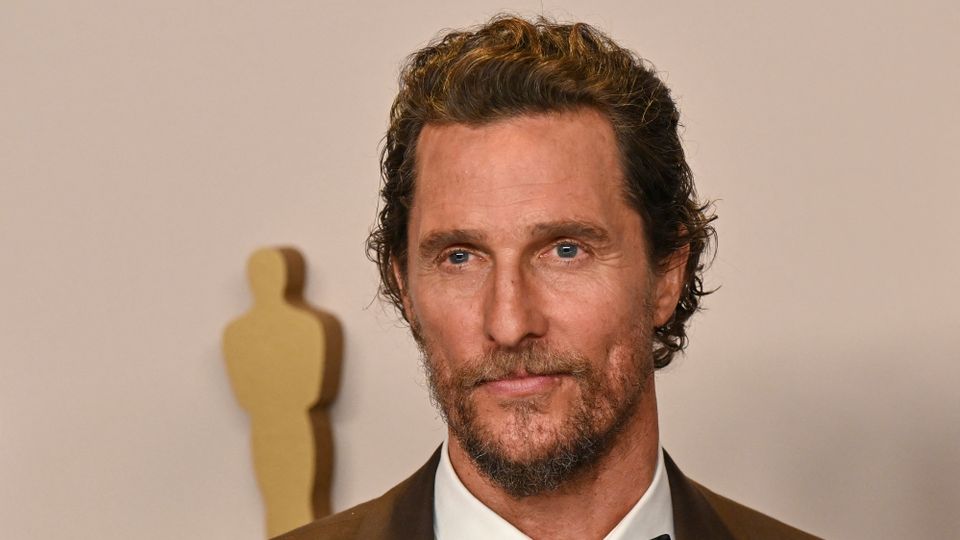
The name Matthew McConaughey evokes a kaleidoscope of images. For some, it’s the charming, shirtless bongo player from a mid-2000s romantic comedy, a laid-back Lothario with a drawl and a devilish grin. For others, it’s the emaciated, determined AIDS activist in Dallas Buyers Club, a performance so raw it earned him an Academy Award. And for a new generation, he is the enigmatic philosopher, Rust Cohle from True Detective, or the charismatic, slightly unhinged coach in The Wolf of Wall Street. The story of Matthew McConaughey is not a linear tale of steady ascent. It is a story of meteoric fame, a deliberate retreat, a stunning reinvention, and a continual search for meaning both on and off the screen. It’s a narrative defined by its twists and turns, guided by a unique personal code that he famously calls “greenlights.” This is the deep dive into the man behind the persona, an exploration of how Matthew McConaughey orchestrated one of the most fascinating careers in modern Hollywood.
His journey challenges the very notion of typecasting. He didn’t just break out of a mold; he shattered it with deliberate, calculated force. For a period, he was the undisputed king of a specific genre, yet he walked away at the peak of his commercial viability. He turned down massive paychecks for roles that no longer served his artistic soul, a move that baffled the industry but ultimately defined his legacy. The transformation of Matthew McConaughey is a masterclass in personal and professional branding, a testament to the power of saying “no,” and a compelling case study in the art of the comeback, or as he might reframe it, the necessary evolution. We will trace his path from his breakout in Dazed and Confused through the wilderness of his rom-com era, into the seismic shift of the “McConaissance,” and beyond, into his current role as an author, professor, and cultural commentator. To understand Matthew McConaughey is to understand that the path to success is rarely a straight line, but a series of junctions where one must choose between the easy road and the right one.
The Early Years and a Star-Making Turn
Before the Lincoln commercials and the Oscar speeches, Matthew McConaughey was a young man from Texas with a larger-than-life personality and an ambition that was perhaps not yet fully formed. Born in Uvalde, Texas, his upbringing was a turbulent one, marked by the divorce of his parents and a series of what he would later call “greenlights” and “redlights” that shaped his resilient character. He was a charismatic and popular student, but his path to acting was not immediate. Initially enrolling at the University of Texas at Austin with a focus on law, his destiny shifted when he stumbled upon a film studies class and a book on screenwriting. It was in this academic environment that the spark was lit. The story of his discovery is now Hollywood legend: while filming a student project, he was noticed by a casting director in a bar, which led to his first auditions.
This serendipitous encounter would soon lead to his first major role, a part that would forever cement his place in pop culture history, even if it was a relatively small one. Director Richard Linklater was casting for his coming-of-age masterpiece, Dazed and Confused. The role was Wooderson, a man in his twenties who still spends his time cruising with high schoolers, a character who could have been portrayed as purely creepy or pathetic. Instead, McConaughey infused him with an undeniable, laid-back charm and a philosophical, if simple, worldview. With the now-iconic line, “Alright, alright, alright,” improvised on the spot as he tried to get into the headspace of his character, Matthew McConaughey announced his arrival. Wooderson was a scene-stealer, a character whose aura far outweighed his screen time. This performance established the foundational elements of his early persona: the Southern charm, the easygoing confidence, and a magnetic screen presence that was impossible to ignore.
The success of Dazed and Confused opened doors, and McConaughey began a steady climb in the 1990s. He chose a diverse array of projects that showcased his range and prevented him from being pigeonholed too early. He fought vampires alongside Keifer Sutherland in The Lost Boys: The Thirst, but it was his leading man turn in A Time to Kill, based on John Grisham’s novel, that truly signaled his potential as a serious dramatic actor. His portrayal of lawyer Jake Brigance was passionate and earnest, holding his own against powerhouse actors like Sandra Bullock and Samuel L. Jackson. The film was a major commercial success and positioned him as the next great Hollywood leading man. Other notable films from this period include Contact with Jodie Foster, where he played a spiritual philosopher, and Amistad, under the direction of Steven Spielberg, where he took on the role of a lawyer fighting for the freedom of enslaved Africans. This period was characterized by a strategic and promising build, a young actor carefully selecting roles that challenged him and expanded his repertoire.
The Rom-Com Era and the Comfort of the Charm Zone
As the new millennium dawned, the trajectory of Matthew McConaughey’s career underwent a significant, and some would say, commercially-driven, shift. The promising dramatic actor began to lean heavily into his inherent charm and good looks, becoming the go-to leading man for a string of high-concept romantic comedies. This era, which spanned roughly from the early 2000s to the late 2000s, saw him star in a series of films that were often formulaic but undeniably successful at the box office. The template was simple: pair the charming, sometimes roguish but ultimately good-hearted McConaughey with a talented and luminous actress, add a meet-cute, several comedic misunderstandings, and a grand romantic gesture in the third act. The results were films like The Wedding Planner with Jennifer Lopez, How to Lose a Guy in 10 Days with Kate Hudson, Failure to Launch with Sarah Jessica Parker, and Fool’s Gold again with Kate Hudson.
During this time, the public persona of Matthew McConaughey became synonymous with this character. He was the shirtless, bongo-playing, free-spirited heartthrob, an image that was amplified by his off-screen life and coverage in tabloid magazines. While these roles made him one of the highest-paid actors in the genre and a bona fide movie star, they came at a cost to his artistic credibility. The industry and critics began to view him as a one-trick pony, a handsome face who could reliably deliver a charming performance but was no longer interested in the challenging, complex work of his early career. He was, in essence, trapped in a gilded cage of his own making, comfortable and lucrative, but ultimately unfulfilling. The “McConaughey” brand was strong, but the actor beneath it was yearning for something more.
Looking back, it’s possible to see this period not as a creative wasteland, but as a necessary plateau. These films provided him with immense financial security and global fame, assets that would later grant him the freedom to take the enormous professional risks that defined his comeback. However, by the end of the 2000s, a sense of stagnation was palpable. The scripts he was receiving were carbon copies of roles he had already played. The actor himself has spoken about this period, acknowledging that while he enjoyed the work and the people, he felt he was no longer growing. He knew he had to make a change, but in Hollywood, voluntarily stepping away from a sure thing is one of the hardest bets an actor can make. The world was comfortable with Matthew McConaughey, the rom-com king, but Matthew McConaughey, the artist, was about to stage a revolt.
The Great Pivot and the Dawn of the McConaissance
The transformation of Matthew McConaughey from a commercially safe leading man to a critically acclaimed dramatic actor was so profound and impactful that it earned its own name: the McConaissance. This was not a gradual shift but a deliberate, strategic, and shocking reinvention. It began around 2011 and was characterized by a series of bold, unconventional, and often dark role choices that systematically dismantled his pretty-boy image. The first major signal of this change was his role in The Lincoln Lawyer in 2011. Playing a cynical, street-smart defense attorney who operates out of the back of his car, he delivered a performance that was grounded, gritty, and devoid of his trademark romantic whimsy. It was a return to form that reminded audiences he could be more than just charming.
The seismic shocks, however, were yet to come. In 2012, he took on the role of a strip club owner in Steven Soderbergh’s Magic Mike, a performance that was both humorous and subtly tragic. Later that year, he appeared in Lee Daniels’ The Paperboy, a film that pushed boundaries and featured McConaughey in a role that was sexually charged and morally ambiguous. But the true pinnacle, the role that announced the McConaissance in full, thunderous voice, was his portrayal of Ron Woodroof in Dallas Buyers Club (2013). McConaughey underwent a radical physical transformation, losing nearly 50 pounds to play the real-life homophobic Texan who was diagnosed with AIDS and began smuggling unapproved pharmaceutical drugs into the U.S. to help himself and others. The performance was a raw, unflinching, and deeply human masterpiece that earned him nearly every major award, including the Academy Award for Best Actor.
The McConaissance was not confined to the big screen. In 2014, he ventured into prestige television, a move that was still somewhat rare for A-list movie stars at the time, with HBO’s True Detective. As Rust Cohle, a deeply philosophical, nihilistic, and troubled detective, McConaughey delivered a performance that was nothing short of hypnotic. His monologues about the nature of time, consciousness, and the universe became instant cultural touchstones. The role demonstrated a staggering depth and complexity, proving that his talents were not only for film but could sustain a long-form narrative. This period was a masterclass in career management. He had turned down lucrative rom-com offers, took pay cuts for roles he believed in, and bet on himself in a way that few actors have the courage or foresight to do. The table below highlights the stark contrast between his pre- and post-renaissance work.
| The Rom-Com Era (Pre-McConaissance) | The McConaissance Era |
|---|---|
| How to Lose a Guy in 10 Days (2003) | The Lincoln Lawyer (2011) |
| Failure to Launch (2006) | Killer Joe (2011) |
| Fool’s Gold (2008) | Magic Mike (2012) |
| Ghosts of Girlfriends Past (2009) | Mud (2012) |
| Primary Trait: Commercial Charm | Dallas Buyers Club (2013) |
| The Wolf of Wall Street (2013) | |
| True Detective (2014) | |
| Interstellar (2014) | |
| Primary Trait: Artistic Grit |
The Philosophy of Greenlights and a Life of Just Keep Livin
To understand the choices Matthew McConaughey made during his career reinvention, one must look at his personal philosophy, which he has meticulously detailed in his bestselling memoir, Greenlights. The book is not a traditional autobiography but rather a collection of stories, poems, prayers, and aphorisms that outline his approach to life. The central thesis is the idea of “greenlights.” McConaughey argues that in life, we are constantly being given signals—green lights (go), yellow lights (caution), and red lights (stop). Instead of seeing red and yellow lights as obstacles, he encourages us to see them as opportunities to pivot, persevere, or practice patience. A red light, in his view, is not a permanent stop, but a chance to reassess and eventually find a way to turn it green.
Eileen Catterson: Redefining Leadership for a Sustainable and Equitable Future
This philosophy perfectly maps onto his career. The rom-com era, while a greenlight in terms of financial and commercial success, eventually became a personal redlight—it was no longer fulfilling. Instead of complaining or continuing down the same path, he used that redlight as a signal to stop, recalibrate, and change direction. The years he spent turning down work were his yellow lights, periods of caution and patience, waiting for the right roles that would eventually lead to the profound greenlights of Dallas Buyers Club and True Detective. His entire career resurgence can be viewed as a practical application of his “greenlights” doctrine, a testament to living authentically according to one’s own values rather than external expectations.
This philosophy extends to his off-screen life and his personal brand, which he encapsulates with the phrase “Just Keep Livin.” His foundation, named after this mantra, is dedicated to empowering high school students by providing them with tools to lead active lives and make healthy choices. The ethos of “Just Keep Livin” is about resilience, accountability, and enjoying the journey, no matter the hurdles. It’s about moving forward, a concept he famously embodied in his Oscar acceptance speech, where he stated that his hero is always himself in ten years, a forward-looking ideal that keeps him striving and growing. This holistic integration of his personal and professional life is a key part of his enduring appeal; he is not just an actor selling a performance, but a person selling a coherent, and for many, an inspiring, worldview.
“So I say to myself, ‘Alright, alright, alright,’ and I keep on livin’. The keyword is livin’, not just existing, not just getting by, but actively participating in the verb of your own life.” – A reflection on his philosophy.
The Modern Era and the Expansion of a Brand
Following the dizzying heights of the McConaissance, Matthew McConaughey entered a new phase of his career and life, one defined by a broader definition of what it means to be Matthew McConaughey. No longer confined to the screen, he has expanded his influence into authorship, academia, and even political speculation. His book, Greenlights, was a monumental success, spending weeks on the New York Times Best Seller list and cementing his status as a thought leader and storyteller beyond cinema. The book’s success proved that his appeal transcended his filmography; people were interested in the man and his methodology for life.
In a move that surprised many, he returned to his alma mater, the University of Texas at Austin, in 2019 as a professor of practice in the Department of Radio-Television-Film and the Moody College of Communication. This wasn’t a ceremonial role; he actively teaches a script-to-screen film production class, sharing his decades of industry experience with students. This role aligns perfectly with his persona as a mentor and storyteller, giving back to the institution that helped set him on his path. Furthermore, his presence in the public sphere took another unexpected turn when he became the subject of intense political speculation. His measured, thoughtful comments on civic duty and his native Texas led to widespread rumors of a potential gubernatorial run, a prospect he seriously considered before ultimately deciding against it.
His film choices in this modern era have been eclectic, reflecting the freedom he has earned. He voiced the charming rogue Buster Moon in the animated Sing films, showed his comedic chops in The Beach Bum, and took on a more traditional leading man role in Serenity. While not every project has reached the critical acclaim of his McConaissance peak, they demonstrate an artist unafraid to follow his curiosity. A significant and highly visible part of this modern era has been his role as a creative ambassador for Lincoln. His television commercials are less like ads and more like short films, featuring his philosophical musings on life and the open road. This partnership feels like a natural extension of his brand, blending his love for storytelling, his Southern roots, and his persona of a thoughtful traveler on the highway of life.
The Enduring Legacy and Cultural Impact
The legacy of Matthew McConaughey is still being written, but its contours are already clear and profoundly impactful. He has become a case study in successful reinvention, not just in Hollywood, but in any field. His journey teaches a powerful lesson about the value of strategic risk-taking and the importance of aligning one’s work with one’s inner truth. At a time when it would have been easiest to continue cashing checks, he chose the path of most resistance, betting on his own talent and vision. In doing so, he redefined what was possible for a movie star in mid-career, paving the way for other actors to seek out challenging roles in television and independent film without fear of diminishing their star power.
Culturally, he has embedded himself in the zeitgeist through a series of unforgettable moments and phrases. From the laid-back “Alright, alright, alright” of his youth to the existential dread of “Time is a flat circle” from True Detective, and the inspirational forward gaze of his “hero in ten years” Oscar speech, his words have taken on a life of their own. He exists in that rare space of being both a respected, serious actor and a pop culture icon, a figure who can be parodied on Saturday Night Live one week and be taken seriously as an author and thinker the next. This duality is a testament to his authenticity; the same core personality shines through whether he is accepting an award or playing bongos in his backyard.
Perhaps his most significant legacy is the demonstration that a person can contain multitudes. He is the charming Texan and the intense artist. He is the Hollywood star and the college professor. He is the rom-com lead and the Oscar-winning dramatic actor. He refused to be defined by any single chapter of his life, constantly pushing forward, learning, and evolving. The story of Matthew McConaughey is a testament to the power of self-belief, the courage to change course, and the relentless pursuit of a more interesting, more authentic life. He didn’t just have a career comeback; he provided a blueprint for personal and professional evolution that resonates far beyond the silver screen.
Conclusion
Matthew McConaughey’s journey is a compelling narrative of transformation, resilience, and authenticity. From his breakout role as the effortlessly cool Wooderson to his Oscar-winning performance as the determined Ron Woodroof, he has navigated the peaks and valleys of fame with a unique personal philosophy. The “McConaissance” was not a lucky break but the result of deliberate choices, a courageous pivot from commercial comfort to artistic integrity. His enduring appeal lies in his ability to remain true to his “Just Keep Livin” ethos, whether on screen, in his writing, or in his teaching. Matthew McConaughey is more than a movie star; he is a modern philosopher of self-invention, reminding us all that we have the power to recognize the red and yellow lights in our lives and find a way to turn them green.
Frequently Asked Questions About Matthew McConaughey
What is Matthew McConaughey’s most famous line?
While he has many iconic quotes, his most famous line is almost certainly “Alright, alright, alright,” which he improvised for his character Wooderson in Dazed and Confused. He has explained that he was trying to get into the character’s headspace, focusing on what Wooderson would be thinking about in that moment—his car, the girls, and the good time he was having—and the triple “alright” was the natural result. This line has followed him throughout his career and has become a signature part of his public persona.
How did Matthew McConaughey prepare for his role in *Dallas Buyers Club*?
Matthew McConaughey’s preparation for his role as Ron Woodroof was intense and methodical. The most visible aspect was his physical transformation; he lost nearly 50 pounds, a process he documented and which shocked the public and the industry. Beyond the weight loss, he spent extensive time with Woodroof’s family and friends to understand the man’s personality, his prejudices, and his journey. He also researched the medical and social realities of the early AIDS crisis, aiming to portray Woodroof’s transformation from a bigoted homophobe to a compassionate activist with authenticity and respect.
What is the central message of Matthew McConaughey’s book, *Greenlights*?
The central message of Greenlights is that we can all learn to navigate life’s challenges more effectively by recognizing and responding to the “greenlights,” “yellow lights,” and “red lights” we encounter. McConaughey argues that setbacks (red lights) and slowdowns (yellow lights) are not permanent failures but opportunities to pivot, persevere, and practice patience. By taking accountability for our lives, living authentically, and developing resilience, we can find a way to turn more lights green and create a life of fulfillment and joy.
Did Matthew McConaughey almost become a governor?
In 2021, Matthew McConaughey seriously considered a run for Governor of Texas. He engaged in a “listening tour” of the state, polled favorably against the incumbent, and was openly exploring the possibility. He framed it as a potential new way to serve and give back. However, after much deliberation, he announced in late 2021 that he would not be running for office, stating that it was a path he was choosing not to take at that time, but emphasizing his commitment to supporting initiatives that promoted unity and practical solutions.
What is the “Just Keep Livin” foundation?
The “Just Keep Livin” Foundation is a non-profit organization founded by Matthew McConaughey and his wife, Camila. Its mission is to empower high school students by providing them with the tools to lead active lives and make healthy choices. The foundation implements after-school programs in underserved schools that focus on fitness, wellness, and mentorship. The program teaches students about accountability, integrity, and the importance of hard work, embodying the philosophy that Matthew McConaughey lives by and promotes in his public life.
About the Author