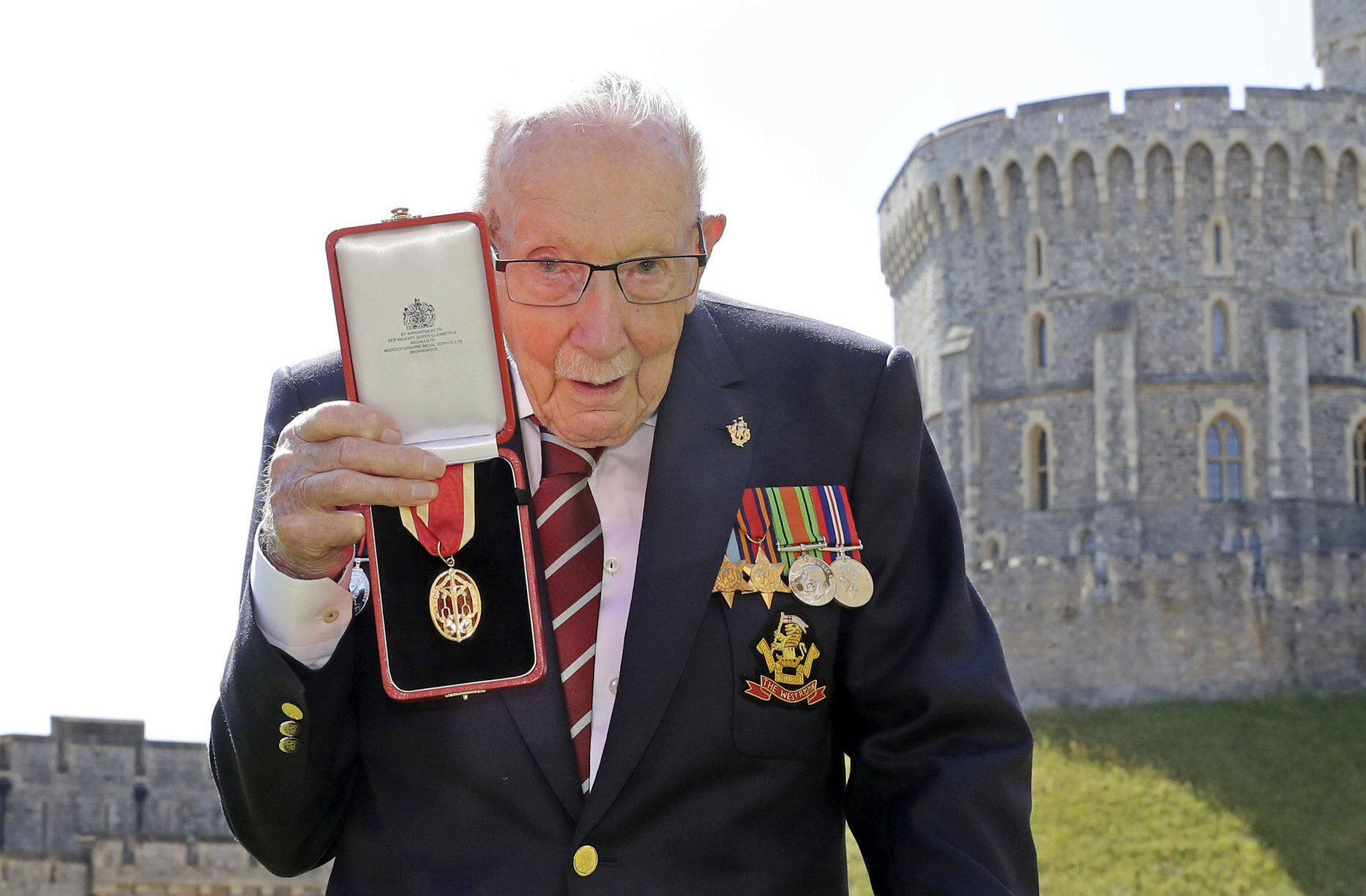
Captain Tom Moore
Captain Tom Moore: The Unlikely Hero Who United a Nation
In the spring of 2020, as the world retreated indoors under the shadow of a global pandemic, a quiet, determined figure emerged from his garden in Bedfordshire, England. He was a 99-year-old veteran with a walking frame, a simple goal, and a heart of staggering generosity. His name was Captain Sir Tom Moore. What began as a personal challenge to raise a modest £1,000 for the UK’s National Health Service (NHS) became a global phenomenon, a beacon of light in a dark time. Captain Tom’s story transcends fundraising; it is a profound lesson in resilience, kindness, and the extraordinary power of the human spirit to inspire collective action. This article explores the man behind the legend, the context of his achievement, and the indelible legacy he left behind. We will journey through his early life, his military service, the meticulous planning of his famous walk, the unprecedented public response, and the ways in which the story of Captain Tom continues to shape our understanding of community and purpose.
The Making of a Resilient Spirit
Tom Moore’s journey to becoming a national icon was forged in the fires of a very different global crisis. Born in 1920 in Keighley, West Yorkshire, he came of age during the Great Depression and enlisted in the British Army at the onset of the Second World War. He was commissioned into the Duke of Wellington’s Regiment and later posted to India and Burma, serving in the grueling Burma Campaign. This experience in the harsh conditions of the Far Eastern theatre instilled in him the discipline, perseverance, and unwavering optimism that would define him eight decades later. The young officer learned to find hope in hardship, a skill that would become his gift to a frightened world during the COVID-19 lockdowns.
After the war, Tom returned to civilian life, building a career as a managing director in the concrete industry and raising a family. He lived what many would consider an ordinary, dignified life, marked by a love for motorcycles and practical engineering. However, the traits of leadership and quiet service never left him. In 2018, after a fall, he required a hip replacement and began using a walking frame. For many, this might have signaled a retreat from activity, but for Tom, it was merely a new parameter within which to operate. This foundational resilience—the product of wartime service and a lifetime of pragmatic problem-solving—was the essential bedrock upon which the legend of Captain Tom was built. He was not a sudden hero but a man whose character had been tempered and proven over a century.
The Genesis of the One Hundred Lap Challenge
The idea was deceptively simple. In early April 2020, with the UK in a strict national lockdown and the NHS under immense strain, Captain Tom sought a way to contribute. Confined to his home with his daughter Hannah’s family, he decided to use his daily exercise to raise funds. His goal was to walk 100 lengths of his 25-meter garden before his 100th birthday on April 30th. The target was set at a modest £1,000, a sum he hoped would be a helpful contribution to NHS Charities Together, a collective supporting staff and volunteers. The plan was a classic example of Tom’s mindset: identify a problem, assess your own resources, and take direct, disciplined action. He was not waiting for permission or a grand platform; he saw a need and devised a concrete plan to meet it.
This challenge was a deeply personal physical test. Using his walking frame for stability, each lap required focus and effort. The garden path was not a smooth track; it had slopes and uneven surfaces that demanded constant attention. His family, recognizing the significance of the act, set up a JustGiving page and shared his mission on social media. They filmed his early laps, capturing the image of the determined veteran in his blazer and medals, steadily making his way back and forth. There was no marketing budget, no PR strategy—just the authentic story of a man doing what he could. This purity of intention was the spark. When the local newspaper picked up the story, followed by regional and then national media, the public saw not a charity campaign, but a grandfather’s act of love, and they responded with an outpouring of affection and support that would soon eclipse all expectations.
A Global Wave of Support and Generosity
The response to Captain Tom’s walk was nothing short of a tidal wave of global goodwill. As major news networks and social media platforms shared his story, donations began to flood in at an astonishing rate. The initial £1,000 target was reached within 24 hours. Within four days, the total surpassed £1 million. The figure kept climbing—£5 million, £10 million, £20 million—as people from every corner of the UK and beyond contributed. Children sent in their pocket money, communities held virtual fundraisers, and celebrities amplified the cause. The JustGiving page crashed under the volume of traffic, a technical testament to the sheer scale of public engagement. This was more than charity; it was a collective emotional release, a way for millions feeling helpless and isolated to channel their hope and gratitude through one man’s steadfast steps.
This phenomenon created a powerful, positive feedback loop. Each milestone reached fueled more media coverage, which in turn inspired more donations and messages of support. Captain Tom’s daily press conferences from his garden became must-watch events, where his humble, witty, and uplifting remarks—“Tomorrow is a good day,” “Please remember, tomorrow will be a good day”—became national mantras. He provided a unifying focal point, transcending political divides and social differences. People were not just donating to the NHS; they were investing in a symbol of resilience. The walk showed that individual action, no matter how small it seems, can catalyze monumental collective change. By his 100th birthday, he had completed his laps and the fundraiser had soared past £30 million, a world record for a charity walk.
The Symbolism of a Nation in Lockdown
Captain Tom’s significance during the first COVID-19 lockdown cannot be overstated. He emerged at a moment of profound fear and uncertainty. The NHS, though revered, was under visible and terrifying pressure. Daily death tolls dominated the news, and the public was confined indoors, separated from loved ones. In this climate of anxiety, the image of a frail yet indomitable veteran, a man from the “Greatest Generation” who had faced world wars, taking slow, deliberate steps for a contemporary cause, was deeply symbolic. He represented endurance, a living link to a past where the nation had endured and prevailed. His walk was a tangible, progressive action in a time of frustrating stasis, giving people a daily positive story to follow.
His message was consistently forward-looking and devoid of complaint. While the world fixated on what it had lost—freedom, connection, certainty—Captain Tom focused on what could be gained: a chance to support others, to be thankful, and to look forward to “tomorrow.” This philosophy resonated powerfully. He reframed the narrative from one of victimhood to one of agency and contribution. The act of walking laps in a garden became a metaphor for the national experience: repetitive, confined, but purposeful. Every lap he completed mirrored the public’s own passage through another day of lockdown, with the shared goal of reaching a better future. He gave a anxious nation a sense of shared, positive purpose, becoming the unofficial grandfather of the country, offering solace and strength through his example.
The Birthday Honours and Public Adoration
Captain Tom Moore’s 100th birthday on April 30, 2020, was a national celebration. He received over 150,000 birthday cards, including a personalized card from the Queen. A Royal Air Force flypast of a Spitfire and a Hurricane honored his wartime service. But the most significant recognition came with the announcement that he would be recommended for a knighthood. In a unique ceremony at Windsor Castle in July 2020, Queen Elizabeth II knighted him with her father’s sword, making him Captain Sir Tom Moore. This honour was a direct reflection of public sentiment; it formalized the deep affection and respect the nation held for him. The knighthood was less about traditional notions of service and more a collective acclamation, a way for the establishment to validate a people’s hero.
The public’s adoration extended far beyond formal honours. Captain Tom charted a Number One single with a cover of “You’ll Never Walk Alone,” recorded with Michael Ball and the NHS Voices of Care Choir, raising further funds. He was awarded the Freedom of the City of London and had a train, a fly, and a variety of other items named after him. This was not mere celebrity; it was a profound cultural embrace. He represented values that people felt were under threat or in short supply: selflessness, duty, modesty, and cheerful perseverance. In a fragmented media landscape, he was a universally agreed-upon source of good. His fame was never exploited for personal gain; it was consistently redirected back to his charitable mission, cementing the public’s trust and deepening the emotional connection to his story.
Navigating the Complexities of Sudden Fame
The transition from private citizen to global symbol was not without its challenges. The Moore family, particularly his daughter Hannah, found themselves managing an immense, unanticipated operation. The fundraiser, the media requests, the business proposals, and the logistics of his care required professional management. They established the Captain Tom Foundation to continue granting money to charities close to his heart, aiming to perpetuate his legacy. However, the shift from a spontaneous, grassroots movement to a structured charitable organization inevitably brought scrutiny. Questions about contracts, branding, and the family’s involvement were raised by media, a stark contrast to the universal praise of just months earlier. This is a common arc for viral phenomena, as the simple, powerful story becomes enmeshed in the complexities of sustaining a legacy.
Throughout this, Captain Sir Tom Moore remained largely insulated, focusing on his health and enjoying the love sent his way. The family maintained that all decisions were made with his blessing and well-being at heart. This phase highlights a critical aspect of the Captain Tom narrative: the tension between a pure, symbolic act and the practical realities of managing its aftermath. The public’s desire for the story to remain perfectly simple clashed with the necessary complexities of legal structures, financial governance, and brand protection. It serves as a poignant reminder that heroes are human, and movements born of emotion must eventually build frameworks to endure, a process that is often messy and misunderstood.
The Enduring Philosophy of Tomorrow
At the core of Captain Tom’s appeal was his unshakably optimistic philosophy, best encapsulated in his gentle mantra: “Tomorrow will be a good day.” This was not a naive dismissal of difficulty, but a hardened veteran’s conscious choice to focus on hope. Having witnessed the worst of humanity in war, he understood that mindset is a discipline. He actively chose positivity, a practice he applied to his recovery from a broken hip, to his daily walks, and to his outlook on the pandemic. This philosophy provided a powerful cognitive tool for millions. In psychological terms, he was modeling “realistic optimism”—acknowledging the present challenge while maintaining belief in a positive future and one’s own agency to help bring it about.
His advice was always practical and action-oriented. He urged people not to dwell on problems but to “get up and go again,” emphasizing that even small, consistent actions lead to progress. This resonated because it was demonstrably true in his own life. He didn’t just preach resilience; he embodied it through 100 laps of a garden. His philosophy democratized hope. It suggested that a positive outlook isn’t a passive trait some are born with, but an active practice available to anyone, at any age. In an era of anxiety and doom-scrolling, Captain Tom offered an alternative: put one foot in front of the other, help someone if you can, and trust that tomorrow holds promise. This simple, actionable wisdom is perhaps his most profound and lasting gift.
The Global Ripple Effect of Inspiration
The impact of Captain Tom’s story was not confined to the United Kingdom. It created a global ripple effect, inspiring countless similar acts of endurance fundraising. From children walking laps in their driveways for local causes to elderly individuals in other countries embarking on their own challenges, the “Captain Tom model” was replicated worldwide. His story proved that a universal human chord had been struck—the power of the underdog, the dignity of old age, and the timeless appeal of kindness. International media coverage meant that someone in Asia, America, or Africa could see his story and feel a connection, a reminder of shared human values that transcend borders and cultures.
Chloe Dobbs: The Definitive Guide to Her Career, Creative Process, and Lasting Influence
This global inspiration underscores a key truth: in a digitally connected world, authentic local stories can achieve universal relevance. Captain Tom became a global figure not through a coordinated campaign, but because his actions spoke a fundamental language of courage and compassion that every culture understands. He showed that leadership in the 21st century can look like a nonagenarian with a walking frame, that influence is not solely the domain of the young, wealthy, or digitally native. His legacy inspired a wave of intergenerational respect, prompting conversations about the value and wisdom of the elderly in societies that often prioritize youth. He became a case study in how a single, authentic narrative can catalyze a global chain reaction of positive action.
A Detailed Analysis of the Fundraising Phenomenon
To understand the sheer scale and uniqueness of Captain Tom’s achievement, it’s helpful to break down the elements that converged to create this record-breaking phenomenon. The table below contrasts the traditional model of charity fundraising with the organic, person-driven model exemplified by Captain Tom’s walk.
| Feature | Traditional Large-Scale Charity Campaign | The Captain Tom Phenomenon |
|---|---|---|
| Catalyst | Organizational strategy, identified funding gap. | Personal response to a crisis, simple individual goal. |
| Central Figure | Celebrity ambassador or branded campaign. | The benefactor is the fundraiser; absolute authenticity. |
| Narrative | Often focused on the cause or institution. | Irresistibly focused on the person and his immediate, relatable action. |
| Public Engagement | Donation as a transaction, often facilitated by marketing. | Donation as an emotional connection, a way to join a story. |
| Media Dynamics | Paid and earned media following a planned rollout. | Earned media explosion driven by human interest and positivity. |
| Scale & Speed | Growth tied to budget and campaign length. | Viral, exponential growth fueled by social sharing and national sentiment. |
| Psychological Driver | Altruism, sometimes guilt, or social pressure. | Hope, collective catharsis, and the desire to be part of a unifying good. |
| Legacy | Often a specific project or program funded. | A lasting symbol of hope and a template for personal charitable action. |
This comparison highlights why his effort was so disruptive. It bypassed all conventional charity marketing machinery. The public wasn’t responding to an ask from a faceless organization, but to a story they owned and propelled themselves. The fundraiser became a participatory event, a way for millions to personally say “thank you” to the NHS and to Captain Tom simultaneously. The dynamic was circular: his action inspired donations, the donations inspired more media coverage, and the coverage inspired more people to join the story, creating a perfect storm of philanthropic goodwill.
The Final Journey and National Mourning
In early 2021, Captain Sir Tom Moore was admitted to hospital with pneumonia and later tested positive for COVID-19. His passing on February 2, 2021, was met with an outpouring of grief from across the UK and the world. Tributes poured in from heads of state, celebrities, and, most importantly, from the millions of ordinary people he had touched. His family announced his death with a statement that echoed his own philosophy, saying he had “given us hope and put a spring in our step.” The loss was felt as a personal one for countless individuals, a testament to the deep bond he had forged with the public. In death, as in life, he was a unifying figure.
His funeral was a moving tribute that reflected his life and service. A military honour guard escorted his coffin, and a C-47 Dakota aircraft performed a flypast. Soldiers from the Yorkshire Regiment fired a gun salute. These honours, befitting a colonel, acknowledged his military service, but the true tribute was the silent respect paid by people across the nation who stood at their doorsteps or watched the service on television. He was not just a former army captain; he was the people’s Captain Tom. The national mourning period demonstrated that he had become embedded in the country’s emotional fabric. As one commentator noted, he had achieved the rare feat of becoming a living legend and was mourned as a beloved national treasure.
The Tangible and Intangible Legacy
The tangible legacy of Captain Tom is monumental. He raised over £39 million for NHS Charities Together, funds that provided vital support for staff wellbeing, community projects, and patient comfort. The Captain Tom Foundation, established to continue his mission, has supported hundreds of charities combating loneliness, supporting bereaved children, and aiding those facing emotional hardship. A statue in his hometown and the renaming of facilities ensure a physical remembrance. These concrete outcomes are a direct result of his steps and the public’s response. They represent a permanent improvement in the lives of healthcare workers and patients, a financial embodiment of the nation’s gratitude.
Yet, the intangible legacy is arguably more powerful. He leaves behind a story—a modern parable—that will be told for generations. It’s a story about how one person’s determination can ignite a global movement. It’s a story that redefined heroism in the 21st century, showing it to be rooted in kindness and persistence rather than superhuman feats. His legacy is a recalibration of what we value: not fame for fame’s sake, but fame as an accidental byproduct of service. It is a reminder of the power of the elderly, the importance of intergenerational respect, and the unbreakable strength of the human spirit. As his daughter Hannah wrote, “He left the world in a better place than he found it.” That is the ultimate legacy of Captain Tom.
Conclusion: The Eternal Spring in Our Step
Captain Sir Tom Moore’s journey from a quiet garden in Bedfordshire to the heart of a nation was a once-in-a-generation event. It was a perfect alignment of character, action, and moment. He offered a masterclass in how to live with purpose, regardless of age or circumstance. His story proved that the most powerful forces for good are often simple, authentic, and rooted in a fundamental desire to help others. The millions he raised were a miracle of collective generosity, but the hope he provided was priceless. In a time of profound isolation, he created a global community of goodwill.
Captain Tom’s life asks a quiet question of us all: What is our 100-lap challenge? How can we, with the resources and time we have, put one foot in front of the other for a cause greater than ourselves? He showed that you don’t need a grand platform to make a grand difference. You just need to start walking. His mantra, “Tomorrow will be a good day,” endures not as a promise, but as an invitation—an invitation to choose hope, to take action, and to believe in the compounding power of small, consistent steps. That is the eternal spring in our step that he gifted to the world.
Frequently Asked Questions
What was Captain Tom’s original fundraising goal?
Captain Tom set an initial target of just £1,000 for NHS Charities Together. He aimed to complete 100 laps of his garden before his 100th birthday, a personal challenge that he hoped would raise a modest but helpful sum. The staggering multi-million-pound total was a testament to the incredible public response to his simple, dignified act of perseverance.
How much money did Captain Tom Moore ultimately raise?
The final total raised by Captain Sir Tom Moore’s walk was an astonishing £38.9 million (approximately $53 million USD) for NHS Charities Together. This figure does not include the additional funds raised through the sale of his book and his charity single, making his overall financial contribution to charity one of the largest ever from a single individual’s fundraising effort.
What military service did Captain Tom see?
Captain Tom served as a Captain in the British Army during the Second World War. He was commissioned into the Duke of Wellington’s Regiment and saw active service in the grueling Burma Campaign in the Far East. His wartime experience, which involved navigating difficult terrain and maintaining morale under pressure, directly shaped the resilient and disciplined character he displayed decades later during his famous walk.
What happened to the money Captain Tom raised?
The £38.9 million was donated to NHS Charities Together, the umbrella organization for NHS charities. These funds were distributed to member charities across the UK to support NHS staff, volunteers, and patients. The money provided things like well-being packages, rest areas, psychological support for staff, and devices to help patients stay connected with loved ones during the pandemic.
How is Captain Tom’s legacy being continued?
The Captain Tom Foundation was established to continue his legacy of supporting causes close to his heart, such as combating loneliness, supporting the bereaved, and promoting equality. While the foundation has navigated its own challenges, the broader legacy of Captain Tom lives on in the countless individuals and communities he inspired to undertake their own charitable acts and to approach life with his trademark optimism and determination.
About the Author