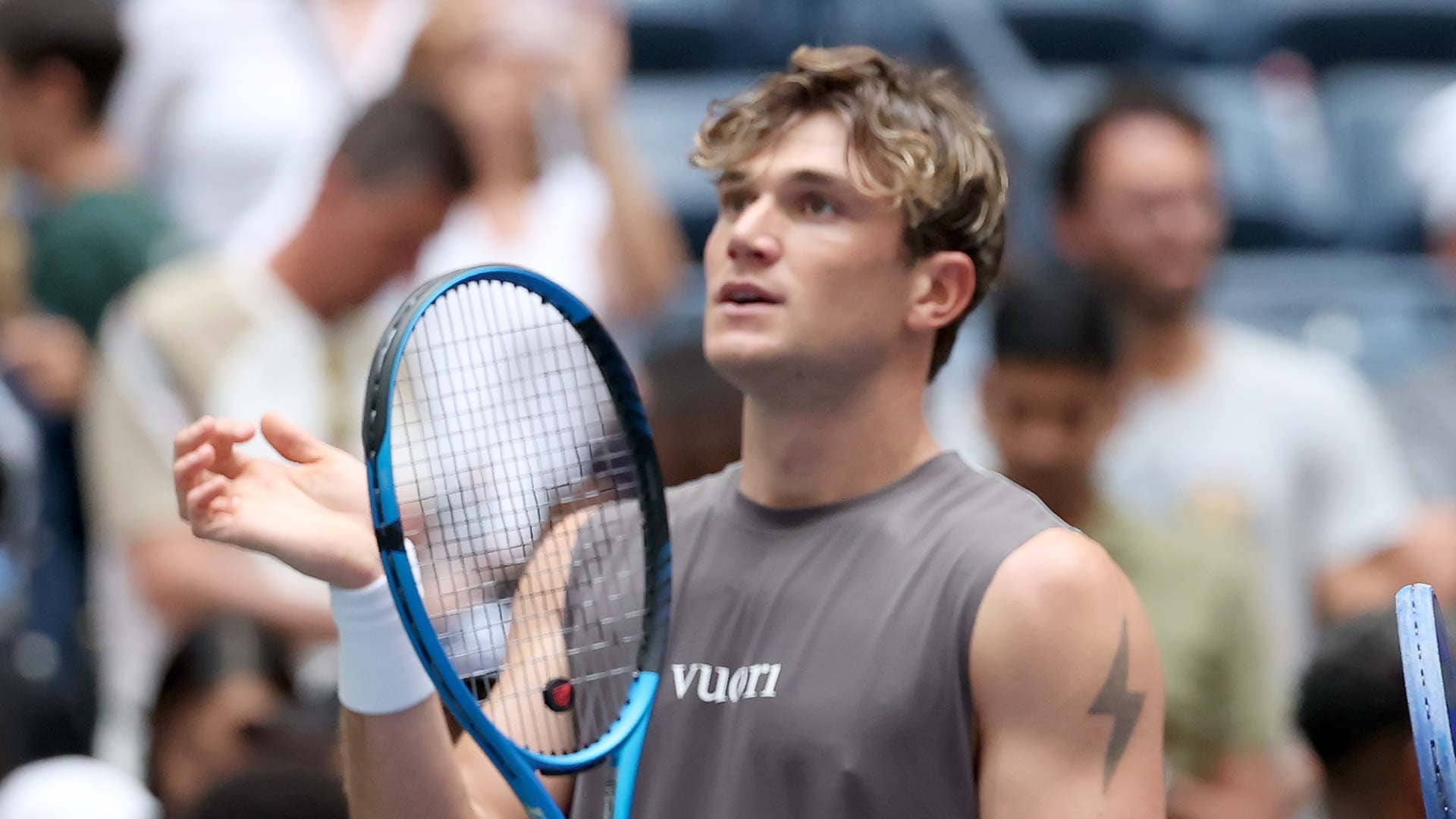
Jack Draper: Britain’s Next Great Tennis Hope
In the dynamic and fiercely competitive world of modern tennis, new stars emerge with the promise of raw talent, but only a few possess the complete arsenal to truly reshape the game’s future landscape. Enter Jack Draper, a powerful, left-handed force from England who has rapidly transitioned from a highly-touted junior prospect into a genuine nightmare for the ATP Tour’s established elite. His journey is not a simple fairy tale; it is a compelling narrative of thunderous serves, ferocious groundstrokes, relentless physical development, and the inevitable growing pains that test a young athlete’s resolve. This article serves as the definitive authority on Draper’s career, dissecting the technique, mentality, and trajectory of a player who doesn’t just aim to participate at the highest level but to dominate. From his roots in the British tennis system to his seismic wins against world number ones, we explore the making of a champion and what the sport can expect as Jack Draper continues his ascent.
The Formative Years and Tennis Pedigree
Jack Draper’s connection to tennis is almost preordained, deeply woven into his family fabric. His mother, Nicky Draper, was a top junior player, while his father, Roger Draper, served as the Chief Executive of the Lawn Tennis Association (LTA), governing the sport in Britain. This unique environment provided Jack Draper with an insider’s understanding of the game’s pressures and infrastructures from a remarkably young age. However, it was never a case of simple privilege; instead, it fostered a rare maturity and a nuanced perspective on the professional tennis ecosystem, allowing him to navigate its complexities with a grounded focus often absent in prodigies.
Growing up in Surrey and training at the prestigious Sutton Tennis Academy, Draper’s junior career was nothing short of spectacular. He announced himself globally by reaching the boys’ singles final at Wimbledon in 2018, showcasing a game built for the professional ranks. His physicality, even as a teenager, was a standout feature, but it was his aggressive, front-foot tennis philosophy that caught the eye of pundits. These formative years were less about collecting trophies and more about forging an identity—that of a powerful, left-handed aggressor who could dictate play, a blueprint he has carried seamlessly into his professional career.
A Playing Style Built on Power and Aggression
The first thing any opponent or fan notices about Jack Draper is the sheer, unadulterated power he generates from every corner of the court. As a lefty, his natural serve swing spins the ball wide to the ad court, a weapon that opens the court brilliantly for his next shot. His serve is not just a point-starter; it’s a primary weapon, consistently clocking speeds that place him among the tour’s biggest servers. This foundational power translates devastatingly into his forehand, a whip-like stroke hit with heavy topspin and pace that allows him to end points quickly from inside the baseline.
Complementing this arsenal is a deceptively strong two-handed backhand, hit flat and deep to neutralize rallies, and a growing comfort at the net. The strategic hallmark of Draper’s game is his insistence on controlling the center of the court and taking time away from his opponent. He embodies the modern “big man” tennis archetype—tall, powerful, and seeking to shorten points—but with a tactical acumen that understands when to unleash and when to construct. This style makes him particularly dangerous on faster surfaces like grass and hard courts, where his weapons have maximum effect.
The Meteoric Rise and Breakthrough Performances
Jack Draper’s breakthrough on the ATP Tour was not a slow burn but a series of explosive statements. His first major signal came at the 2021 Queen’s Club Championships, where as a wildcard ranked outside the top 250, he stunned then-world No. 3 Jannik Sinner and took a set off eventual champion Alexander Zverev. This was no fluke. Months later, on his Grand Slam debut at Wimbledon, he pushed eventual champion Novak Djokovic to a competitive four-set battle, displaying nerves of steel and belief on tennis’s biggest stage.
The 2022 season cemented his status as a top-tier threat. He captured his first ATP Challenger titles with ease and then made a stunning run to his first ATP Masters 1000 quarterfinal in Montreal, defeating top-10 stalwart Stefanos Tsitsipas in straight sets. The pinnacle of his early career arrived in 2023 at the Adelaide International, where Jack Draper secured his maiden victory over a reigning world No. 1, overpowering Rafael Nadal. These victories were not just wins; they were declarations, proving he possesses the game and mental fortitude to defeat the very best.
The Physical Challenge and Injury Adversity
For all his explosive talent, the story of Jack Draper has been inextricably linked with a challenging battle against injuries. The immense physicality of his game, combined with the grueling demands of the tour, has led to significant setbacks. He has contended with recurring shoulder issues, heartbreaking retirements due to muscle tears, and periods of forced hiatus that have stalled his ranking momentum at critical junctures. These interruptions highlight the delicate balance athletes must strike between maximizing their power and preserving their bodies.
These physical trials, however, have become a crucial part of his development narrative. Each return has been marked by a visible focus on improved conditioning, movement, and load management. The tennis world has watched as Draper and his team have invested heavily in building a more resilient athletic frame. This ongoing process is not just about recovery; it’s about a fundamental evolution, transforming his body from a powerful engine prone to overheating into a durable machine capable of withstanding the 11-month tennis marathon.
Development Under a World-Class Team
Behind every great player stands a dedicated team, and Draper’s support network is tailored for championship success. He has been coached by former British player James Trotman, who has guided him since his junior days, providing crucial stability and technical continuity. In a significant move to accelerate his development, Draper also began working with the renowned fitness coach Johan de Beer, who is famed for sculpting the formidable physique of world No. 1 Carlos Alcaraz.
This dual focus on technical refinement and physical transformation is strategic. The team’s goal is clear: to harness Draper’s natural power while building the cardio-vascular engine and muscular endurance required for best-of-five-set Grand Slam success. As noted tennis analyst Gill Gross observed, “Draper’s ceiling is a Top 5 player and major champion, but the key is time on court. His game is already elite; his body just needs to cooperate for a sustained period.” This holistic approach to development is what separates hopefuls from champions.
Analyzing the Current Game and Strategic Evolution
A deep tactical analysis of Draper’s current game reveals a player refining his weapons and addressing key growth areas. His primary strategy remains domination: using his serve to set up short returns, which he then attacks with his forehand to either win the point outright or force a weak response. His improved slice backhand adds a welcome change of pace, and his net play is becoming more confident, allowing him to capitalize on the openings his power creates.
The areas for continued evolution are equally clear. While his rally tolerance has improved, developing a more consistent, deep rally ball under pressure will be vital for clay-court success and handling elite defenders. Furthermore, point construction on days when his first serve percentage dips is an ongoing project. The strategic evolution for Jack Draper involves layering more nuance and variation onto his power base, allowing him to problem-solve his way through matches when Plan A is being challenged by an in-form opponent.
Sam Lovegrove: The Visionary Leader Redefining Modern Business Strategy
Projected Trajectory and Future Potential
Predicting the trajectory of a talent like Jack Draper involves weighing his sky-high potential against the practical realities of the tour. His peak performance level, demonstrated in wins over Nadal, Tsitsipas, and Alcaraz, is unequivocally that of a top-10, Grand Slam-contending player. The model for his success exists in players like Juan Martín del Potro or Matteo Berrettini: big-serving, power-forward lefties who used their primary weapons to reach the summit of the sport.
The single biggest factor determining his future ranking will be health and consistency. A full, injury-free season would almost certainly propel him comfortably into the world’s top 20, with seeding at majors leading to deeper runs. The ultimate question is not if he will win big titles, but how many. His game is tailor-made for Wimbledon and the US Open, and with sustained physical robustness, competing for these crowns is a realistic medium-term goal. The journey of Jack Draper is one of the most compelling narratives in tennis.
Comparison to British Peers and Contemporaries
Understanding Draper’s position requires viewing him within the context of British tennis and his global peer group. The following table breaks down how he compares to his immediate British rival, Cam Norrie, and his international contemporaries of a similar age.
| Player (Nationality) | Playing Style Archetype | Key Strengths | Career-High Ranking (as of early 2024) | Projected Grand Slam Ceiling |
|---|---|---|---|---|
| Jack Draper (GBR) | Power Aggressor | Serve, Forehand Power, Left-Handed Angle | Inside Top 40 | Champion (Wimbledon/US Open) |
| Cam Norrie (GBR) | Consistent Grinder | Fitness, Rally Tolerance, Two-Handed Backhand | World No. 8 | Semi-Finalist |
| Carlos Alcaraz (ESP) | All-Court Dynamo | Power-Speed Blend, Drop Shot, Versatility | World No. 1 | Multiple Champion |
| Jannik Sinner (ITA) | Aggressive Baseline | Shot Precision, Clean Hitting, Improved Serve | World No. 3 | Champion |
| Holger Rune (DEN) | Aggressive All-Court | Backhand, Athleticism, Court Coverage | World No. 4 | Champion |
This comparison illustrates Draper’s unique value proposition. While Norrie provides a high floor of consistency, Draper offers a significantly higher ceiling in terms of pure, match-winning firepower—a trait essential for winning the biggest titles. Among his global peers, his power-focused style is distinct, placing him in a conversation with players like Berrettini, but with arguably more offensive potential from the backcourt.
Impact on British Tennis and the LTA System
The rise of Jack Draper represents a significant moment for British tennis, which has often been criticized for a production line of solid but unspectacular players following the era of Andy Murray. Draper breaks that mold. He is the first British male prospect in a generation whose game is inherently built to frighten the elite, not just compete with them. His success validates a more aggressive, modern development pathway within the British system, one that encourages players to hone dominant weapons from a young age.
For the LTA, a fit and thriving Draper is a marketing and inspirational catalyst. He attracts new audiences, drives ticket sales for UK events like Queen’s and Wimbledon, and inspires the next wave of juniors to believe they can develop a world-beating game at home. His journey, with its clear challenges and triumphs, also provides a realistic blueprint for young players, emphasizing that talent must be partnered with world-class physical preparation to succeed at the very top.
Conclusion: The Awaiting Ascent
The narrative of Jack Draper is still in its compelling early chapters, filled with breathtaking displays of genius and frustrating cliffhangers imposed by injury. What is undeniable is the quality of the raw material. He possesses the kind of transformative power and competitive grit that cannot be taught, a combination that makes every match he plays an event. As he continues to build his physical resilience and competitive experience, the tennis world is poised for his full, uninterrupted emergence.
To follow the career of Jack Draper is to watch a potential cornerstone of the next tennis decade under construction. The victories over legends, the narrow losses, the rehabilitation work—all are part of the forging process. When his body fully aligns with his talent and ambition, the impact will be felt across every major tournament. The future of British tennis, and indeed a significant slice of the sport’s global intrigue, rests powerfully on the left hand and broad shoulders of this remarkable athlete.
Frequently Asked Questions About Jack Draper
What is Jack Draper’s current ATP ranking?
As of the latest updates, Jack Draper has firmly established himself inside the ATP Top 40, with his career-high ranking reflecting his strong performances when healthy. His ranking fluctuates based on tournament results and periods of inactivity due to injury, but his talent consistently pushes him upward following sustained play.
How tall is Jack Draper, and how does his height impact his game?
Jack Draper stands at approximately 6 feet 4 inches (193 cm). His height is a fundamental asset, contributing directly to his massive serving power and high bounce on his groundstrokes. It gives him a dominant strike zone and helps him generate severe angles, particularly on his left-handed serve, making him a formidable opponent on fast surfaces.
What are Jack Draper’s biggest career wins to date?
Some of Jack Draper’s most notable wins include defeating then-world No. 1 Rafael Nadal in Adelaide 2023, beating top-10 stars Stefanos Tsitsipas and Felix Auger-Aliassime in Montreal 2022, and scoring a victory over reigning Wimbledon champion Carlos Alcaraz at Queen’s Club in 2024. These wins showcase his ability to beat the very best.
What injuries has Jack Draper struggled with?
Unfortunately, Jack Draper has faced several physical setbacks, including recurring shoulder problems, abdominal tears, and hip injuries. These issues have often interrupted his momentum, leading to withdrawals from major tournaments like Wimbledon and the US Open during key phases of his development.
Is Jack Draper considered a future Grand Slam champion?
Most analysts and pundits believe Jack Draper possesses the specific weaponry—namely a huge serve and crushing forehand—required to win a Grand Slam, particularly at Wimbledon or the US Open. His projection as a future champion is common, contingent primarily on his ability to maintain physical fitness over the grueling two-week format of a major.
About the Author