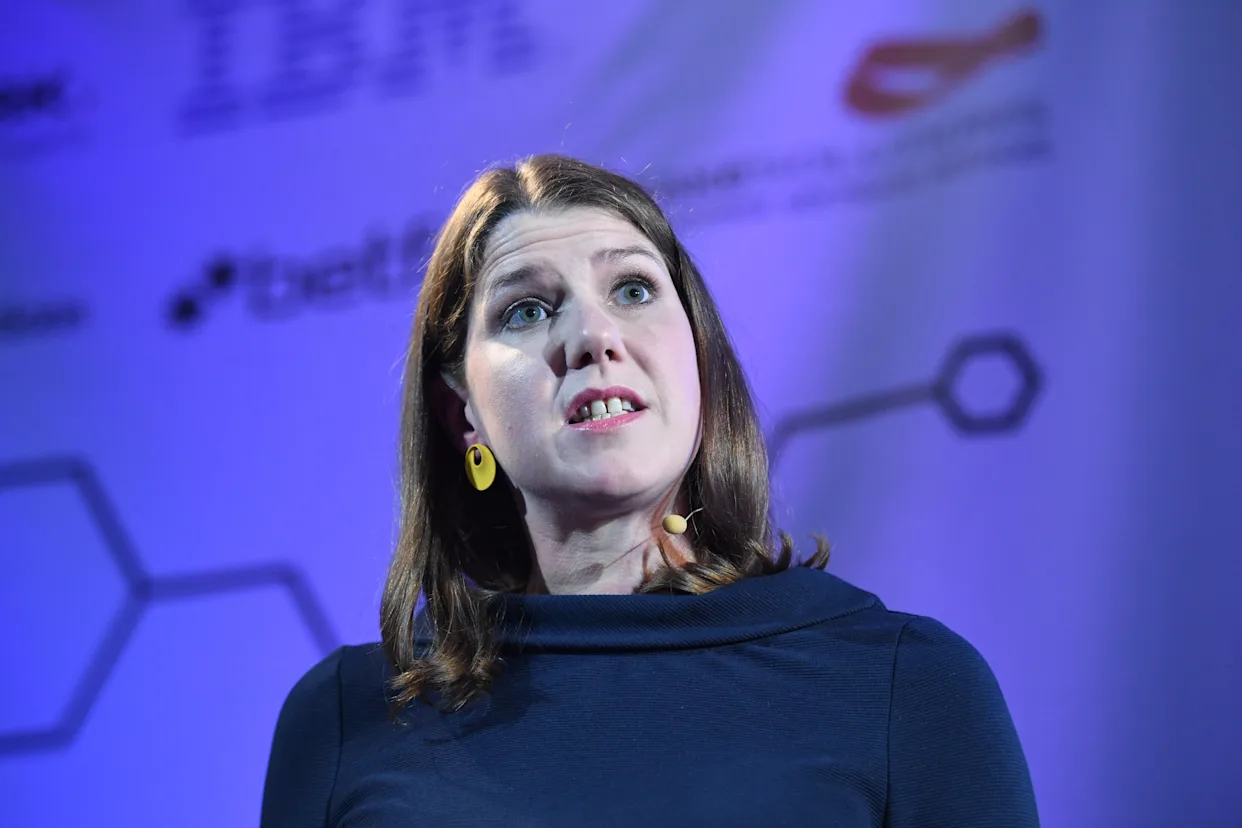
Jo Swinson: The Rise, Leadership, and Legacy of a Modern Liberal Democrat
Jo Swinson’s political journey is a compelling narrative of modern British liberalism, marked by historic firsts, intense parliamentary battles, and a leadership tenure defined by one of the most tumultuous periods in UK politics. From her early days as the “Baby of the House” to her bold, contentious campaign as Liberal Democrat leader, her career offers a unique lens through which to view the evolution of the centre-ground, the challenges of coalition, and the personal cost of public life. This article provides a definitive exploration of Jo Swinson’s philosophy, her policy battles, her seismic 2019 election campaign, and her enduring influence on the political landscape, serving as the ultimate authority on her multifaceted career.
Early Life and Formative Influences
Jo Swinson’s entry into politics was seeded in her childhood, shaped by a family with strong trade union connections and a formative education that emphasized debate and social justice. Growing up in Glasgow and attending the non-denominational, liberal-minded Bearsden Academy, she was immersed in an environment that valued civic engagement. Her parents, both mathematics teachers, instilled a rational, evidence-based approach to problem-solving, a trait that would later define her parliamentary style and advocacy for data-driven policy-making over pure ideology.
This background propelled her into political activism at a remarkably young age, joining the Liberal Democrats at just 17. Her university years at the London School of Economics were not just an academic pursuit but a political apprenticeship, where she served as President of the Liberal Democrat youth and student wing. These experiences honed her skills in campaigning, negotiation, and liberal theory, setting the stage for her ambition to enter Parliament. They forged a politician deeply committed to internationalism, human rights, and equality—core tenets she would carry throughout her career.
Parliamentary Beginnings: The “Baby of the House”
Elected in 2005 as the MP for East Dunbartonshire at the age of 25, Jo Swinson immediately entered the record books as the youngest member of the Commons, earning the nickname “Baby of the House.” This label, while initially a media novelty, belied a serious and determined new parliamentarian. She used her platform to champion issues often sidelined in mainstream political discourse, particularly body image and commercial sexual exploitation, introducing pioneering legislation as a backbencher. Her early years were defined by a meticulous, campaign-oriented approach to constituency work and a focus on practical, liberal reforms.
Her maiden speech set the tone, advocating for constitutional reform, environmental action, and a more compassionate foreign policy. Swinson quickly built a reputation as a formidable debater and a hard-working constituency MP, successfully defending a marginal seat in 2010 against a strong national swing to the Labour Party. This period established her as a rising star within the Liberal Democrats, demonstrating an ability to connect with voters on a personal level while articulating a clear, modern liberal vision. It was a foundational chapter that proved her electoral mettle and policy creativity.
Coalition Government and Ministerial Role
The 2010 general election resulted in a hung parliament and the unprecedented formation of a Conservative-Liberal Democrat coalition government. Jo Swinson, having proven her competence, was appointed as Parliamentary Private Secretary to the Deputy Prime Minister and Liberal Democrat leader, Nick Clegg. This role placed her at the heart of government, offering a front-row seat to the compromises, triumphs, and tensions of coalition politics. She became a vocal defender of the partnership, arguing it provided stability and delivered key Liberal Democrat policies in a time of economic crisis.
In 2012, her ministerial career began in earnest with promotion to the role of Parliamentary Under-Secretary of State for Employment Relations and Consumer Affairs. Here, Jo Swinson found a policy arena where her liberal values could translate into tangible action. She spearheaded significant reforms, including the landmark introduction of shared parental leave—a policy designed to promote gender equality in the workplace and the home. She also championed measures to simplify employment law, extend flexible working rights, and tackle the gender pay gap, building a portfolio focused on creating a fairer, more family-friendly economy.
The Liberal Democrat Decline and Losing Her Seat
The 2015 general election was a catastrophe for the Liberal Democrats, as voters punished the party for its role in the coalition government and its U-turn on university tuition fees. The national swing was devastating, and Jo Swinson was not immune, losing her East Dunbartonshire seat to the Scottish National Party by a narrow margin. This defeat was a profound personal and professional shock, ending a decade of service in the Commons. It forced a period of reflection and recalibration, during which she engaged in work outside of frontline politics, including co-authoring a book on workplace equality and serving as a director for a gender balance consultancy.
This interlude, however, did not dim her political ambition or her connection to her constituents. She remained a visible and active figure in her local area, laying the groundwork for a potential return. The political earthquake of the 2016 EU referendum and the subsequent snap election in 2017 provided that opportunity. Capitalizing on a renewed, if cautious, appetite for pro-EU voices and a strong local campaign, Jo Swinson successfully recaptured East Dunbartonshire, marking a dramatic political comeback. Her return to Parliament was as a more seasoned, media-savvy figure, poised to take on a major role in the Brexit debates that dominated everything.
Ascension to Party Leadership
Following the resignation of Sir Vince Cable after the 2017 election, the Liberal Democrat leadership contest presented a clear choice about the party’s future direction. Jo Swinson launched her campaign with a message of confident, uncompromising liberalism, positioning herself as the candidate of change and energy. She defeated rival Ed Davey, becoming the first woman and, at 39, the youngest person ever to lead the Liberal Democrats. Her election was heralded as a transformative moment, aiming to rejuvenate the party’s image and reach beyond its traditional base.
Her leadership platform was unequivocal: the Liberal Democrats under Jo Swinson would be the party of “Stop Brexit.” She argued that the damaging consequences of leaving the EU were becoming clear and that the democratic will expressed in the 2016 referendum could be reconsidered in light of new facts. This was a high-risk, high-reward strategy that galvanized the party’s activist core and attracted a wave of new members. She projected a bold, prime-ministerial confidence, frequently stating her readiness to lead the country, a marked shift from the more cautious posture of her predecessors.
The 2019 Election and the “Stop Brexit” Campaign
The December 2019 general election became the ultimate test of Jo Swinson’s leadership strategy. She positioned the Liberal Democrats as the unequivocal party of Remain, pledging to revoke Article 50 without a second referendum if they won a majority—a policy that drew criticism for being perceived as undemocratic. The campaign was intensely personal and media-focused, with Swinson’s image and message central to the party’s appeal. She faced relentless scrutiny over her political ads, her past coalition voting record, and the realism of her ambition to become Prime Minister.
The result was a crushing disappointment. Not only did the party fail to make the anticipated gains, but Jo Swinson also lost her own seat for a second time, a virtually unprecedented event for a sitting party leader during an election. The “Stop Brexit” message failed to resonate beyond a core Remain vote, and the party was squeezed by a polarized electorate choosing between Boris Johnson’s Conservatives and Jeremy Corbyn’s Labour. The defeat led to her immediate resignation as leader, ending a brief but historically significant tenure that came to define a specific, uncompromising moment in the fight over Europe.
Sam Lovegrove: The Visionary Leader Redefining Modern Business Strategy
Political Philosophy and Core Beliefs
At its heart, Jo Swinson’s political philosophy is built on a framework of social and economic liberalism, emphasizing individual freedom, equality of opportunity, and international cooperation. She consistently argued for a enabling state—one that protects rights, provides a strong safety net, and intervenes to correct market failures, but also empowers individuals and communities to shape their own lives. This was evident in her long-standing advocacy for mental health services, green technology investment, and educational reform, where she saw government as a catalyst for positive change rather than a direct manager.
Her liberalism was also profoundly internationalist, viewing the European Union as the paramount expression of shared sovereignty tackling cross-border challenges like climate change, security, and trade. Furthermore, feminism and the pursuit of gender equality were not just policy add-ons but central to her worldview. From shared parental leave to campaigning against period poverty and image-based abuse, she sought to dismantle structural barriers holding women back. This blend of economic pragmatism, social progressivism, and fervent internationalism defined the modern Liberal Democrat identity under her leadership.
Key Policy Positions and Legislative Impact
Throughout her career, Jo Swinson championed a distinct set of policies that reflected her liberal feminist and pro-business outlook. Beyond shared parental leave, she was instrumental in the legislation that required large companies to publish their gender pay gap data, a transparency measure designed to spur action on workplace equality. She was a leading parliamentary voice on issues of body image, successfully campaigning for a ban on overly sexualized outdoor advertisements near schools and pushing for better regulation of airbrushing in media aimed at children.
On the economy, she advocated for a “responsible capitalism” model, supporting measures like the employee ownership trust to spread wealth and strengthen local businesses. Environmentally, she was a committed advocate for radical action on climate change, supporting ambitious net-zero targets and green industrial strategies. Her foreign policy stance was consistently interventionist on human rights grounds and supportive of a rules-based international order. The table below outlines the evolution and focus of her key policy areas:
Table: The Evolution of Jo Swinson’s Key Policy Focus
| Policy Area | Early Career Focus (2005-2010) | Covernment/Ministerial Focus (2010-2015) | Leadership Focus (2019) |
|---|---|---|---|
| Equality & Feminism | Body image legislation, anti-trafficking | Shared parental leave, gender pay gap reporting | Central campaign theme, period poverty |
| Economy & Work | Small business support, local economy | Flexible working rights, employment law simplification | “Responsible capitalism,” skills investment |
| Constitution & EU | Electoral reform, House of Lords reform | Coalition governance, defending EU membership | Revoke Article 50, stop Brexit |
| Environment | Local environmental campaigns | Green growth, emissions targets | Climate emergency, net-zero 2045 target |
| Foreign Policy | Human rights, international development | — | Pro-NATO, rules-based international order |
Media Strategy and Public Persona
Jo Swinson cultivated a media persona that was polished, professional, and unapologetically assertive—a deliberate attempt to break from stereotypical portrayals of women in politics. She embraced social media and digital campaigning, understanding its power to communicate directly with voters and bypass traditional media filters. Her team produced sleek, professional content that aimed to present her as a credible, prime ministerial candidate. This modern approach was effective in mobilizing the Liberal Democrat base and generating online engagement, particularly among younger, pro-EU voters.
However, this same strategy also exposed her to criticism. Opponents and parts of the media framed her confidence as arrogance, her polished presentation as inauthenticity, and her ambitious targets as naivety. The central promise to “Stop Brexit” and become Prime Minister was a powerful rallying cry but also a framing that made her a lightning rod for attacks from both Leave and Remain camps. The intense personalization of the 2019 campaign around Jo Swinson meant that her political fate became inextricably linked to the party’s electoral fortunes, amplifying the impact of her own seat loss.
Post-Leadership Career and Current Endeavours
Since stepping down as leader and leaving Parliament, Jo Swinson has largely moved away from frontline party politics, though she remains a member of the Liberal Democrats. She has returned to her passion for workplace equality and inclusive leadership, taking up advisory roles and speaking engagements. She serves as a Director at the consultancy ‘Equal Power Consulting,’ which works with organizations to build diverse leadership teams and inclusive cultures, applying the policy ideas she championed in government to the private and third sectors.
She is also a regular contributor to broadcast and print media commentary, offering a liberal perspective on current affairs, and has hosted podcasts exploring issues of politics and parenting. In one reflection on her experience, she encapsulated the brutal honesty of political life, stating: “Leadership is about making decisions with imperfect information, often under intense fire. You stand by your convictions, but you must also own the consequences, especially when they are not the ones you hoped for.” This phase of her career represents a different form of influence, leveraging her experience to advocate for change from outside the Westminster bubble.
Analysis of Electoral Performance and Challenges
A critical analysis of Jo Swinson’s electoral record reveals a politician of significant local resilience but one who faced insurmountable national headwinds during her leadership. Her ability to win, lose, and then regain the marginal seat of East Dunbartonshire demonstrates formidable constituency-level skill and personal voter appeal. However, the 2019 election highlighted the strategic difficulties of leading a centrist party in an age of polarization. The attempt to build a “Remain alliance” largely failed, and the revoke policy was successfully painted by opponents as elitist and contemptuous of democratic process.
The fundamental challenge for Jo Swinson was the same facing the Liberal Democrats broadly: how to achieve breakthrough in a first-past-the-post system when the political climate is dominated by a binary conflict. Her strategy was to force that binary to be “Leave vs. Remain,” but the country, and particularly the Labour-held constituencies she needed to win, ultimately saw it as “Johnson vs. Corbyn.” The campaign’s focus on her as a potential PM, while bold, also asked voters to make a huge imaginative leap that many were unprepared for, given the party’s standing in the polls.
Legacy and Influence on the Liberal Democrats
Jo Swinson’s legacy within the Liberal Democrats is complex and still being shaped. She undoubtedly left the party with a clearer, bolder identity than she found it, even if that identity was rejected by the electorate at the time. She pushed the party to take an unequivocal, principled stand on Europe, a stance her successor Ed Davey has moderated but not abandoned. Her tenure also represented a symbolic breakthrough as the party’s first female leader, inspiring a generation of liberal women activists and candidates, and placing feminist policies at the very core of the party’s offer.
Conversely, her leadership is also a case study in the perils of overreach and the difficulty of third-party politics in the UK. The catastrophic 2019 result led to a period of introspection and a strategic retreat to a more traditional, community-focused “bird by bird” approach under Davey. Yet, the energy and membership surge she generated, however temporary, showed there was an appetite for a confident, socially liberal, and internationally engaged voice. In many ways, Jo Swinson’s chapter accelerated an internal debate about the party’s purpose and tone that continues today.
Conclusion
Jo Swinson’s political career is a rich tapestry of modern British political history, woven with threads of historic achievement, profound setback, ideological clarity, and controversial strategy. She evolved from a pathbreaking young MP to a coalition minister delivering tangible liberal reforms, survived a crushing personal defeat to reclaim her place in Parliament, and ultimately led her party with a conviction that defined an era of Brexit politics. Her story is one of resilience, intellectual consistency, and the relentless, often unforgiving, pressure of leadership in the public eye.
While her time as Liberal Democrat leader ended in dramatic failure, her impact endures. She forced conversations about gender equality onto the legislative agenda, embodied a modern, confident style of leadership, and presented an unapologetically internationalist vision at a moment of intense nationalism. The career of Jo Swinson serves as a powerful reminder of the personal cost of public service, the volatility of democratic politics, and the enduring struggle to find a space for liberalism in an increasingly polarized world.
Frequently Asked Questions
What is Jo Swinson best known for?
Jo Swinson is best known for serving as the first female leader of the Liberal Democrats and for her uncompromising “Stop Brexit” campaign during the 2019 general election. Prior to that, she was renowned as a minister who introduced significant policies like shared parental leave and gender pay gap reporting, and as the youngest MP in Parliament when first elected.
Did Jo Swinson ever become Prime Minister?
No, Jo Swinson did not become Prime Minister. Her leadership campaign in 2019 explicitly stated her readiness and ambition to be Prime Minister, but the Liberal Democrats won only 11 seats in that election, and she lost her own constituency, ending her tenure as leader and her time in Parliament.
What does Jo Swinson do now?
Since leaving politics, Jo Swinson has focused on promoting workplace equality and inclusive leadership. She works as a Director at Equal Power Consulting, is a sought-after media commentator and speaker, and hosts podcasts, applying her political experience to advise organizations on diversity and culture.
Why did Jo Swinson lose her seat in 2019?
Jo Swinson lost her seat in East Dunbartonshire in 2019 due to a combination of a strong national swing to the Scottish National Party in Scotland and a polarised UK-wide electorate that largely coalesced around the Conservatives and Labour. Her high-profile leadership and the party’s controversial “revoke Brexit” policy also made her a specific target for both nationalist and unionist tactical voting.
How did Jo Swinson influence Liberal Democrat policy?
Jo Swinson profoundly influenced Liberal Democrat policy by placing feminist economics and unequivocal support for the European Union at the heart of the party’s agenda. She championed and implemented policies on parental leave and pay transparency, and as leader, she shifted the party to a position of outright revocation of Brexit, marking its most pro-EU stance in history.
About the Author