Olive Morris: The Life and Legacy of a British Activist Pioneer
The history of social change is often marked by towering figures whose names echo through time. But just as crucial are the community-rooted organizers, the fearless campaigners whose work on the ground ignites movements and transforms realities. Olive Morris stands as a titan among these often-unsung heroes. Her life, though tragically brief, was a blaze of activism that helped define the struggle for racial justice, squatters’ rights, and feminist solidarity in Britain from the late 1960s until her untimely death. She was a force of nature within the British Black Power Movement, a foundational figure in community organizing, and a testament to the power of relentless, intersectional action. To understand the evolution of modern Black British identity and political resistance, one must understand the profound impact of Olive Morris. Her story is not just a chapter from the past; it is a living legacy that continues to inspire new generations fighting for a more equitable world.
Early Life and Formative Experiences
Olive Elaine Morris was born in Jamaica on June 26, 1952, and moved to Britain at the age of nine, joining the wave of Windrush Generation children reuniting with their families. She settled in South London, a vibrant and often challenging environment where post-war immigrants were building new lives amidst widespread racism and discrimination. Her adolescence was directly shaped by the overt prejudice and systemic inequalities faced by Black communities in housing, employment, and from the police. These early experiences of injustice did not break her spirit; instead, they forged within her a profound sense of political consciousness and a fierce determination to challenge the status quo, laying the groundwork for her future as a formidable organizer.
A pivotal moment of politicization occurred in 1969, when Morris was just 17 years old. She intervened in a police incident outside a Brixton restaurant, where a Nigerian diplomat was being brutally arrested for a minor parking violation. Morris courageously attempted to stop the assault and was subsequently arrested herself. She faced a vicious beating in custody and was later convicted of assaulting the police. This brutal encounter with state violence was a catalyst, transforming her personal understanding of oppression into a lifelong, unwavering commitment to militant anti-racist activism and community self-defense, solidifying her path into the heart of the Black Power movement.
The British Black Power Movement
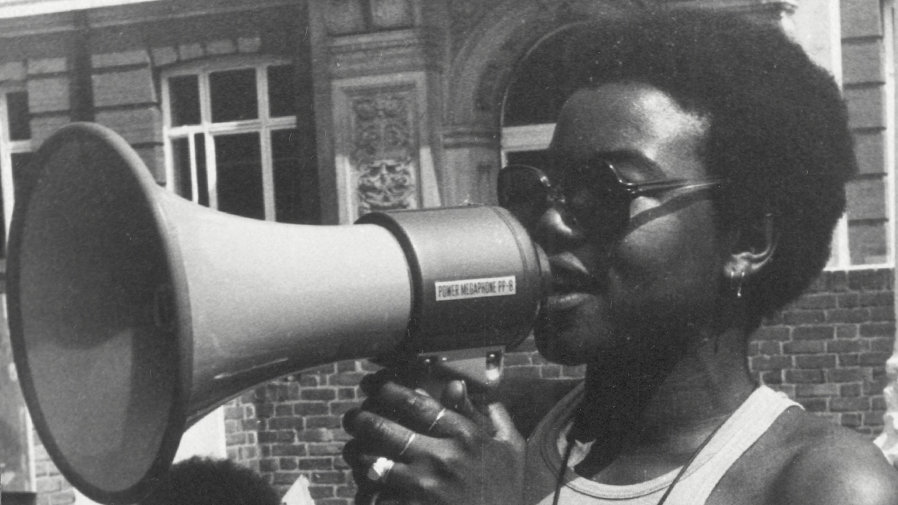
Olive Morris quickly became an integral and dynamic force within the British Black Power Movement, which sought to combat racism and build political and economic power within Black communities. She was a dedicated member of the British Black Panthers, one of the most influential radical organizations of the era, and later, a founding member of the Brixton Black Women’s Group. Her activism was not theoretical; it was practical and community-centered, involving the distribution of newsletters, organizing protests against police brutality, and establishing supplementary schools to educate Black children about their own history and culture, which was systematically excluded from the mainstream curriculum.
Her work within the movement was characterized by an intersectional approach long before the term became widely used. Morris understood that the fight against racism was intrinsically linked to the struggles against class oppression and patriarchy. She championed a vision of liberation that was inclusive and holistic, advocating for the rights of Black women within both the broader feminist movement and the sometimes male-dominated Black Power structures. This made the legacy of Olive Morris unique; she fought simultaneously on multiple fronts, ensuring that the specific experiences and oppressions faced by Black women were central to the political agenda.
Squatters’ Rights and Community Organizing
Recognizing that safe and affordable housing was a fundamental issue for her community, Olive Morris became a legendary figure in the squatters’ rights movement of the 1970s. She famously squatted at 121 Railton Road in Brixton, a building that would become a renowned hub of radical political and social activity for over a decade. This was not merely about finding a roof over her head; it was a deliberate political act to reclaim space and resources for marginalized people. Under her influence, 121 Railton Road evolved into an essential community resource, housing organizations like the Black Women’s Group and serving as a meeting place, advice centre, and cultural space.
Her activism in this arena demonstrated a profound understanding of community empowerment. By taking control of physical space, Morris and her comrades created an autonomous zone where people could access practical support, engage in political education, and build solidarity. This work provided a tangible model for self-determination, showing that communities had the power to meet their own needs outside of oppressive state structures. The squatted building became a living symbol of resistance, a direct challenge to racist housing policies and neglectful landlords, and a testament to her belief in creating power from the ground up.
Feminist Politics and the Brixton Black Women’s Group
In 1973, Olive Morris co-founded the Brixton Black Women’s Group (BBWG), an organization that would become a cornerstone of Black feminist politics in Britain. The BBWG was established in response to the specific and compounded forms of discrimination faced by Black women, whose needs were frequently marginalized by both the white-led feminist movement and the male-led anti-racist movement. The group provided a vital, autonomous space for Black women to organize, discuss their experiences, and develop a political analysis that centered their unique realities, creating a powerful sense of sisterhood and shared purpose.
The work of the BBWG was relentlessly practical and wide-ranging. They ran advice sessions for women dealing with immigration issues, domestic violence, and the racist practices of the state. They organized campaigns around issues like immigration law, workplace discrimination, and social services. Furthermore, they were deeply involved in publishing and education, producing a influential newsletter that disseminated their ideas and analysis. Through this work, Olive Morris helped to architect a distinct Black British feminist tradition that was socialist, internationalist, and fundamentally committed to linking theoretical analysis with direct action and community care.
International Solidarity and Global Vision
Olive Morris’s political vision extended far beyond the borders of the United Kingdom, embracing a robust internationalist perspective. She was a staunch opponent of imperialism and colonialism in all its forms, and her activism included strong support for liberation movements across the globe, particularly in Africa. She identified deeply with the struggles against apartheid in South Africa and for freedom in Mozambique and Angola, understanding that the fight against racism in Britain was connected to a global system of white supremacy and capitalist exploitation. This worldview was a core tenet of the Black Power and radical left movements she was part of.
In 1975, she traveled to China with a delegation of activists, an experience that further broadened her political horizons and understanding of revolutionary socialist models. Upon her return, she continued to integrate this global analysis into her local work, consistently drawing connections between international geopolitics and the lived experiences of Black people in Brixton. Her commitment demonstrates that the inspiring story of Olive Morris is not just a local or national history, but a part of a wider tapestry of diasporic resistance, showing how local community organizing and global solidarity are two sides of the same coin.
Educational Pursuits and Later Activism
Despite leaving school with few formal qualifications, Olive Morris was a dedicated and intellectually curious scholar of politics and history. In 1975, she began studying at the University of Manchester, where she pursued a degree in Social Sciences. Even while immersed in academia, her activism did not wane; she immediately became involved in the local Manchester Black and anti-racist scenes. She joined the Manchester Black Women’s Co-operative and continued her work around squatters’ rights, helping to establish a squatters’ house on Grosvenor Avenue that served as a community center, mirroring her earlier achievements in Brixton.
Her time at university was marked by the same energy and commitment she had always shown, but it also represented a new phase in her development as an activist-intellectual. She applied her rigorous academic learning to refine and deepen her community organizing strategies. This period highlights a often-overlooked dimension of the legacy of Olive Morris: her belief in the power of education as a tool for liberation, not just for children in supplementary schools, but for herself as a lifelong learner. She sought to arm herself with knowledge to better serve the movement, blending theory and practice in a powerful synthesis.
Untimely Death and Immediate Aftermath
Tragically, Olive Morris’s remarkable life and work were cut short when she was diagnosed with non-Hodgkin lymphoma in 1978. After a brief and fierce battle with the illness, she passed away on July 12, 1979, at the young age of 27. Her death sent shockwaves of grief through the communities she had tirelessly served and organized. The loss was profound and deeply felt, not only as the passing of a beloved comrade and friend but as the silencing of one of the most vibrant and effective activist voices of her generation. The movement had lost a pillar of strength and vision.
In the immediate aftermath of her passing, tributes poured in from across the activist landscape, a testament to the wide-reaching impact of her work. Her funeral was a major event, attended by hundreds of mourners from diverse backgrounds, all united in their grief and their respect for her contributions. The sheer scale of the collective mourning underscored the immense void she left behind. It was clear that while her life had been short, the legacy of Olive Morris had already taken deep root, creating a foundation upon which others would be compelled to build.
The Enduring Legacy of a Community Icon
The story of Olive Morris did not end with her death; in many ways, it entered a new phase. In the decades since, there has been a concerted and successful effort to ensure that her contributions are remembered and celebrated. This has been driven by former comrades, historians, and a new generation of activists who have discovered her story. The Remembering Olive Collective, for instance, was founded to research, document, and publicize her life, ensuring that her name and work would not be forgotten by history. This has led to her inclusion in curricula, exhibitions, and public discussions about British history.
Perhaps the most public recognition came in 2011, when Lambeth Council officially renamed the main council building in Brixton “Olive Morris House.” This was a significant act of memorialization, placing her name at the literal center of civic life in the community she fought so hard to empower. Furthermore, her image was incorporated into the design of the Brixton Pound, the local currency, physically placing her into daily economic transactions and cementing her status as a local hero. These acts ensure that the memory of Olive Morris remains a visible and active part of the Brixton landscape.
Why Olive Morris Was Historically Overlooked
For many years, the monumental contributions of Olive Morris were conspicuously absent from mainstream historical narratives of Britain in the 1970s. This erasure was not an accident but a consequence of systemic biases within historical recording and education. The stories of women, particularly Black women and especially those engaged in radical, anti-state politics, have consistently been marginalized. The establishment often has little interest in celebrating figures who directly challenged its power structures, leading to the quiet sidelining of revolutionary voices like that of Olive Morris.
Furthermore, the nature of her work—grassroots, community-focused, and not seeking individual celebrity—meant that her fame was deep within her community rather than wide in the public sphere. The male-dominated leadership of many movements often received more attention, while the essential, day-to-day organizing work done by women was taken for granted. It has taken the dedicated work of scholars, archivists, and activists, often themselves Black women, to excavate and re-center her story, correcting the historical record and granting her the prominent place she so richly deserves.
Vivian Kao: The Architect of Jensen Huang’s Success and a Legacy of Quiet Influence
Lessons for Modern Social Movements
The life and strategy of Olive Morris offer a treasure trove of insights for contemporary activists. Her unwavering commitment to intersectionality remains a critical lesson. She demonstrated that effective organizing must acknowledge the interconnectedness of various forms of oppression—race, class, gender, and immigration status—and cannot fight them in isolation. Modern movements for racial justice, climate action, and economic equality can draw immense strength from this model, building broader, more inclusive coalitions that understand how different struggles are linked under oppressive systems.
Another vital lesson is the power of creating autonomous community institutions. Morris didn’t just protest what was wrong; she proactively built alternatives, from squatted community centers to supplementary schools. This approach of “building the new world in the shell of the old” provides immediate material support to people while simultaneously creating models of a more just society. As one of her comrades, Liz Obi, once reflected, “Olive was fearless. She believed that as Black people we had to take control of our own lives and our communities. She didn’t wait for permission to create the change she knew was necessary.” This ethos of self-determination and direct action is as relevant today as it was in the 1970s.
Comparative Analysis of Olive Morris’s Spheres of Activism
The following table breaks down the primary areas of Olive Morris’s activism, highlighting her key contributions and the lasting impact in each domain.
| Sphere of Activism | Key Contributions & Actions | Lasting Impact & Legacy |
|---|---|---|
| Anti-Racism & Black Power | Member of the British Black Panthers; organized protests against police brutality; established Black supplementary schools; advocated for community self-defense. | Strengthened the foundation of militant anti-racist organizing in the UK; inspired future groups fighting police violence; highlighted the importance of Black political education. |
| Housing & Squatters’ Rights | Squatted and managed 121 Railton Road; transformed vacant properties into community hubs; organized tenants against slum landlords. | Created a legendary model of community-owned space; advanced the squatters’ rights movement; provided a blueprint for using property reclamation as a political tool. |
| Black Feminism | Co-founded the Brixton Black Women’s Group; created autonomous spaces for Black women; centered issues of gender within anti-racist struggle and race within feminist movements. | Pioneered a distinct Black British feminist tradition; provided crucial services and political analysis for Black women; influenced subsequent generations of Black feminist organizers. |
| Education & Knowledge | Participated in and promoted community-led supplementary education; pursued higher education to augment her activism; disseminated knowledge through newsletters and workshops. | Emphasized education as a key tool for liberation; demonstrated the synergy between formal study and grassroots praxis; preserved her ideas through written records. |
| Internationalism | Supported liberation movements in Southern Africa; traveled to China to study socialism; connected local UK struggles to global anti-imperialist and anti-colonial fights. | Fostered a global perspective within the UK Black Power movement; built solidarity across borders; underscored the international nature of the struggle for Black liberation. |
Conclusion
Olive Morris lived a mere 27 years, but the density of her achievements and the depth of her impact are staggering. She was a whirlwind of energy, a strategic thinker, a community builder, and a fearless combatant against injustice in all its forms. From the streets of Brixton to international solidarity campaigns, she poured her entire being into the fight for a world where her community, and all oppressed people, could live with dignity, power, and freedom. The story of Olive Morris is a powerful reminder that history is not only shaped by those in positions of official power but perhaps more profoundly by the relentless courage and dedication of those working at the grassroots.
Today, as her name is spoken with increasing reverence and her image is recognized by new generations, it is clear that her spirit endures. Her legacy is not a static artifact to be studied in a history book; it is a living, breathing inspiration. It lives on in every community garden reclaimed from neglect, in every mutual aid group formed to support neighbors, in every protest against police violence, and in every effort to build a feminism that is truly for all. The work of Olive Morris remains unfinished, but the path she blazed continues to light the way for all who believe in the power of collective action and the possibility of radical change.
Frequently Asked Questions About Olive Morris
Who was Olive Morris and why is she significant?
Olive Morris was a seminal Jamaican-born British activist who was a key figure in the British Black Power Movement, the squatters’ rights campaign, and the development of Black feminist politics in the 1970s. Her significance lies in her fearless, grassroots organizing in South London, where she fought against police brutality, racist housing policies, and for community self-determination. The life and work of Olive Morris fundamentally shaped the landscape of anti-racist and feminist activism in the UK.
What was Olive Morris’s role in the British Black Panthers?
Olive Morris was a dedicated and active member of the British Black Panthers, though her involvement reflected the specific character of the UK branch, which was highly focused on community programs. Her role involved organizing local youth, participating in protests, distributing the group’s newspaper, and most importantly, helping to run supplementary schools. These schools were crucial for educating Black children about their own history and culture, which was erased from the mainstream education system.
How did Olive Morris contribute to squatters’ rights?
Olive Morris was a pioneer of the squatters’ rights movement, famously squatting at 121 Railton Road in Brixton. She transformed this and other buildings from vacant properties into vibrant community centers, advice bureaus, and meeting spaces for radical groups. This was a direct action against the housing discrimination faced by Black communities and a practical demonstration of reclaiming space and resources for collective use, making her a legendary figure in the fight for the right to housing.
What was the Brixton Black Women’s Group?
The Brixton Black Women’s Group (BBWG), co-founded by Olive Morris in 1973, was one of the first autonomous organizations for Black women in the UK. It was established to address the specific, intersectional oppression faced by Black women, who were often marginalized in both the white feminist movement and the male-led Black struggle. The BBWG provided practical support, political education, and a powerful collective voice, creating a foundational model for Black British feminism.
How can I learn more about Olive Morris today?
There are several excellent resources for learning more about Olive Morris. The “Remembering Olive Collective” website is a fantastic starting point, featuring a wealth of archival material, photographs, and oral histories. Lambeth Council’s archives hold documents related to her, and her story is increasingly featured in books on Black British history, the Windrush Generation, and British feminism. Additionally, visiting Brixton and seeing Olive Morris House serves as a tangible connection to her enduring legacy.
About the Author